Electrical
Battery or Alternator? How to Tell Which One Left You Stranded
📅 September 11, 2026
✍️ Supercanic Team
⏱ 5 min read
Two very different problems look identical from the driver's seat. The car will not start. One is a $250 part and one can be three times that, so it is worth knowing which you have before somebody sells you both.
Quick answer. It died while you were driving, so it is the alternator. It would not start after sitting, so it is the battery. A jump that runs fine until you take the cables off points at the battery. A jump that dies again a few minutes later points at the alternator.
No tools needed for the first two.
Two more tells. A battery warning light that comes on while driving is a charging light, not a battery light, and it usually means the alternator or the belt. And if the headlights dim and brighten with engine speed, the charging system is the place to look.

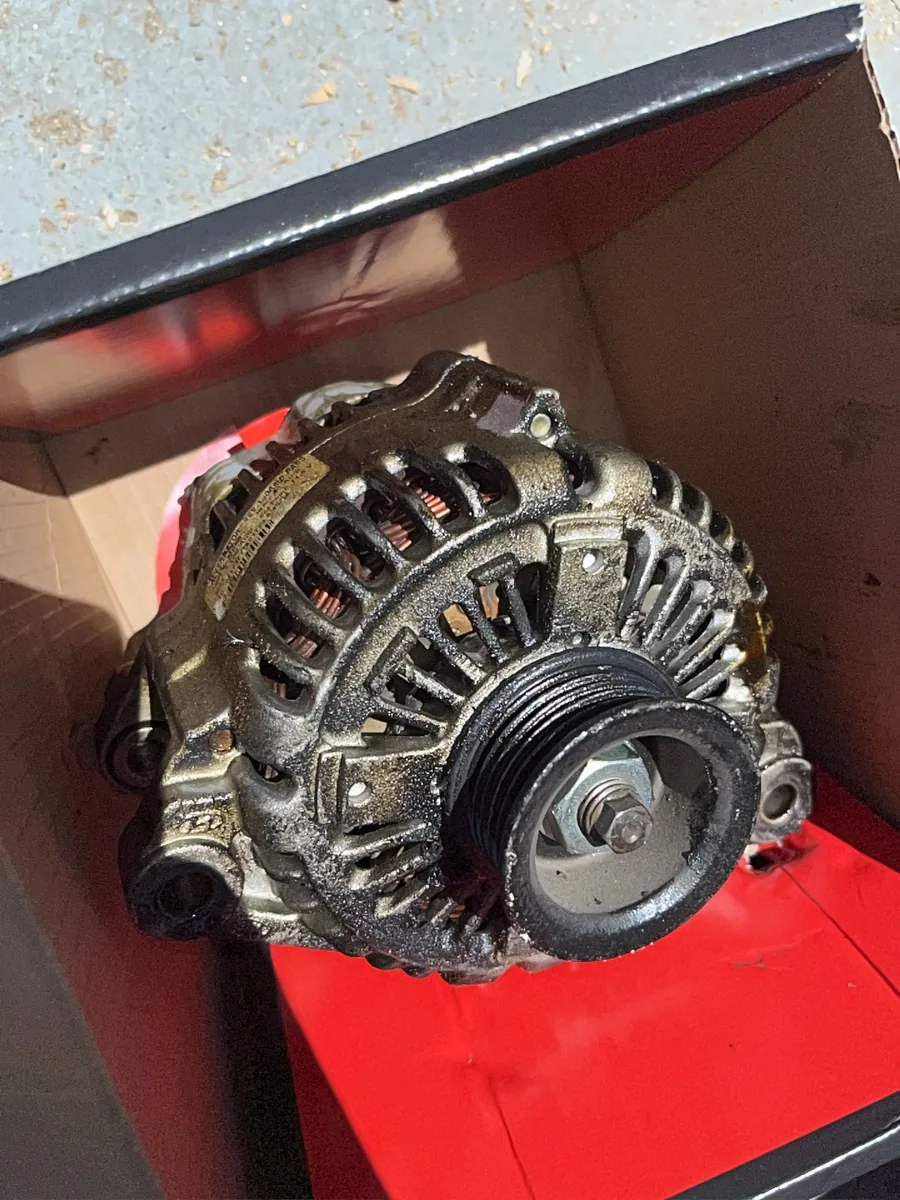
Voltage on its own proves very little. A tired battery can read 12.5 volts and still fail the moment it is asked for current. Here is the real sequence.
| Test | Healthy Result | What a Bad Result Means |
|---|---|---|
| Resting voltage, engine off | 12.4 to 12.7 volts | Under 12.2 means discharged or failing |
| Load test | Holds above 9.6 volts under load | Battery is done regardless of how it reads at rest |
| Charging voltage, engine running | 13.5 to 14.7 volts | Low means alternator or belt. High means a bad regulator |
| Voltage drop on cables | Under 0.3 volts | Corroded terminal or cable, and neither new part will fix it |
| Parasitic draw, car asleep | Under 50 milliamps | Something is staying awake and killing a good battery overnight |
That last one explains most of the cars that eat a battery every few months. A new battery does not fix a draw. It just hides it until the next cold morning.
Heat kills batteries faster than cold does. Cold weather is what exposes a weak one, which is why they seem to fail in winter, but the damage was done in the summer. In a valley that spends weeks over 100 degrees, three to four years is a normal life and five is lucky.
If yours is over three years old and the car has been slow to crank, get it load tested before it strands you. It takes a few minutes and it is free when we are already looking at the car.
Supercanic tip. Do not buy an alternator because a store's free test said so. Those testers are reading at the battery and they cannot see a bad cable or a parasitic draw. Call us at (951) 644-1599 and we will test all of it where the car is sitting.
Get somewhere safe first. We carry batteries and testing gear on the truck and we can do most of this in a parking lot or a driveway, which is usually faster and cheaper than a tow. If the car needs to come in, our shop in San Jacinto is open around the clock and the late night repair guide explains how that actually works.
We test and replace batteries, alternators and starters where the car sits.