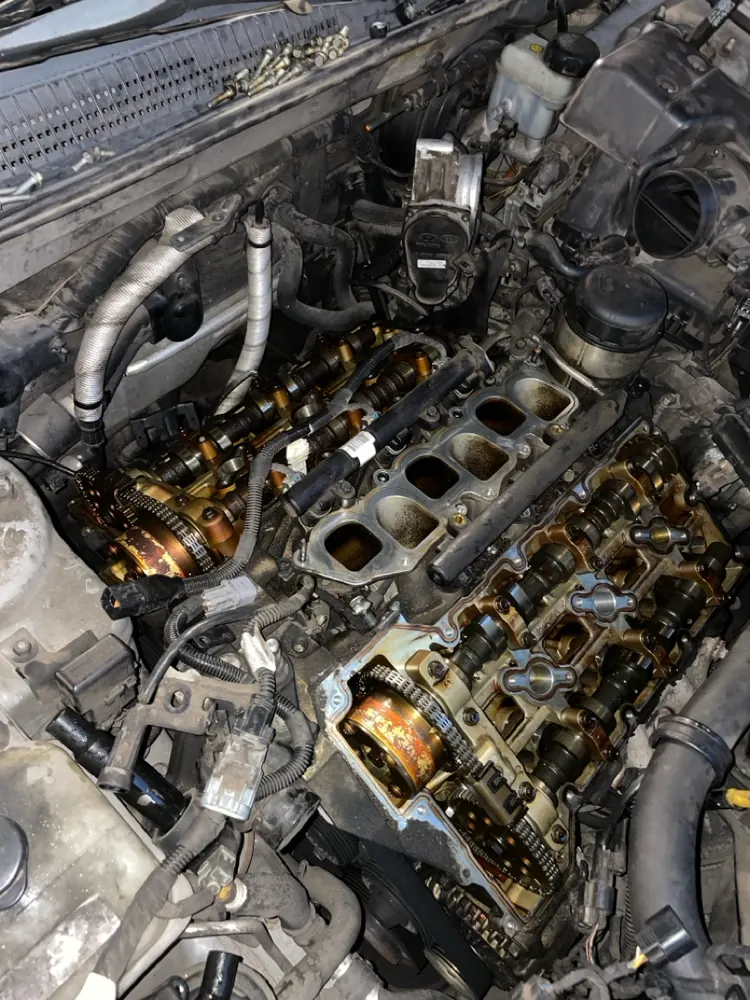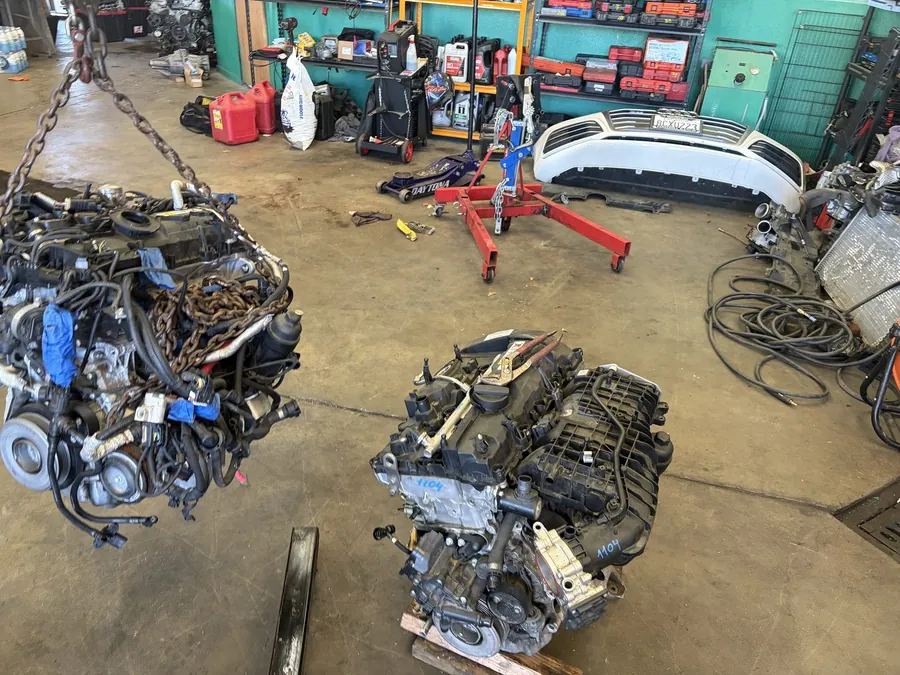
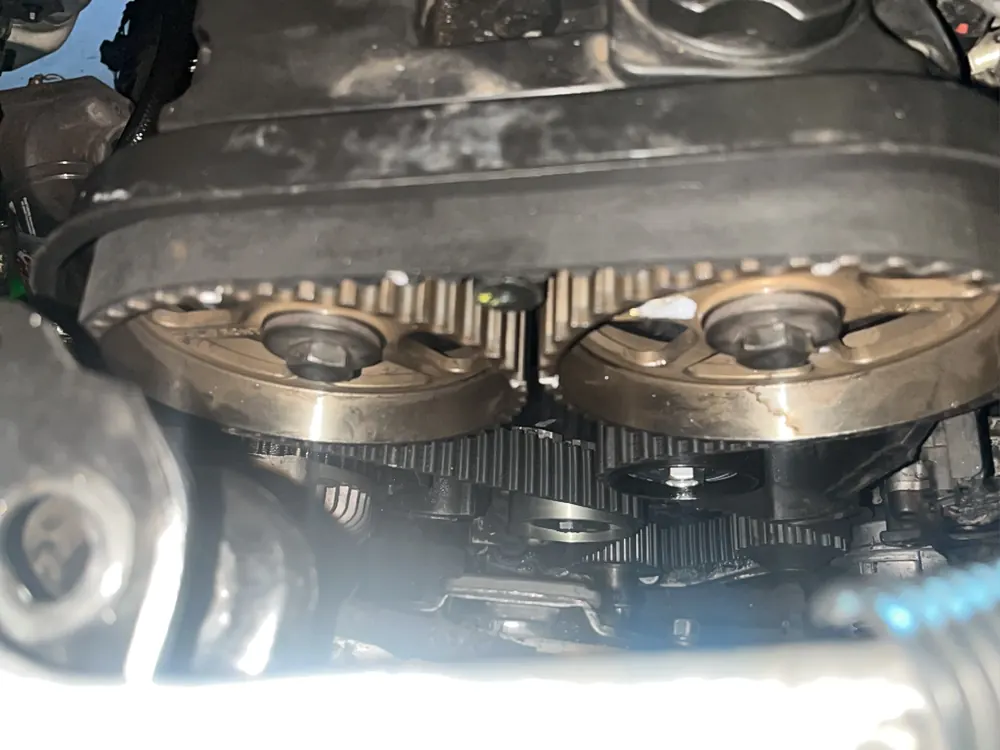
Most people never think about their timing belt until it breaks, and by then the damage can be expensive. A snapped timing belt on an interference engine can bend valves, crack pistons, and turn a $600 repair into a $3,000+ engine rebuild.
Quick answer: Most timing belts should be replaced every 60,000 to 100,000 miles or every 7 to 10 years, whichever comes first. Check your owner's manual for your vehicle's specific interval. If you're past due, book the service now.
What Does the Timing Belt Do?
The timing belt (or timing chain, in some vehicles) synchronizes the rotation of the crankshaft and camshaft. That keeps the engine's valves opening and closing at the right moments during each cylinder's intake and exhaust strokes. If the timing is off by even a fraction, the engine can't run properly, and if the belt snaps, the valves and pistons can collide.
Timing Belt vs. Timing Chain
Not every vehicle uses a belt. Some use a metal timing chain, which generally lasts much longer and doesn't have a fixed replacement interval. Here's how to tell:
- Timing belt: Made of rubber with internal cords. Found on many Honda, Toyota, Subaru, and Hyundai models. Needs scheduled replacement.
- Timing chain: Metal chain similar to a bicycle chain. Found on most GM, Ford, and BMW engines. Typically lasts the life of the engine, but can stretch over time.
If your vehicle has a timing chain and you hear a rattling noise at startup, the chain or its tensioners may be wearing out. Have a mechanic look at it.
Replacement Intervals by Vehicle
These are general guidelines. Confirm yours in the owner's manual or ask your mechanic.
| Vehicle / Brand | Typical Interval | Interference Engine? |
|---|---|---|
| Honda Accord / Civic (4-cyl) | 60,000 to 105,000 miles | Yes |
| Toyota Camry (4-cyl, pre-2010) | 60,000 to 90,000 miles | Yes |
| Subaru Outback / Forester | 105,000 miles | Yes |
| Hyundai / Kia (4-cyl) | 60,000 to 90,000 miles | Yes |
| Volkswagen / Audi (4-cyl turbo) | 80,000 to 120,000 miles | Yes |
| Ford / GM (most V6/V8) | Timing chain, no scheduled replacement | Varies |

Interference vs. Non-Interference Engines
Which kind of engine you have decides how bad a broken belt gets.
- Interference engine: The valves and pistons occupy the same space at different times. If the timing belt breaks, they collide. That means bent valves, damaged pistons and possibly a ruined engine.
- Non-interference engine: The valves and pistons don't overlap. If the belt breaks, the engine stalls but doesn't suffer internal damage. Still needs a tow and a new belt, but the repair is much cheaper.
Most modern engines are interference designs, so we replace the belt on schedule instead of waiting for it to fail.
Warning Signs Your Timing Belt May Be Failing
Timing belts don't always give obvious warnings, which is why mileage-based replacement is the standard. Still, watch for these signs.
- Ticking noise from the engine: This can indicate the belt is worn or a tensioner is failing.
- Engine won't start or cranks but doesn't fire: A broken belt means the engine can't time its combustion cycles.
- Rough idle or misfires: A stretched or slipping belt can throw off ignition timing.
- Oil leaking near the front of the engine: The timing cover gaskets may be failing, a sign the area hasn't been serviced in a long time.
- High mileage without records: If you bought a used vehicle and can't confirm the belt was replaced, assume it's due.
What's Included in a Timing Belt Service?
A proper timing belt job covers more than the belt. A good shop also replaces or inspects these parts.
- The water pump (it's behind the timing cover, so replacing it at the same time saves hundreds in labor later)
- Idler pulleys and tensioner
- Timing cover gaskets and seals
- Coolant (since the system is drained to access the water pump)
How Much Does a Timing Belt Replacement Cost?
Timing belt service is labor-intensive because the front of the engine needs to be partially disassembled. Typical costs:
- Belt only: $400 to $700 (not recommended, since you'll pay labor twice if the water pump fails later)
- Belt + water pump + tensioners: $600 to $1,200 depending on the vehicle
- Belt failure repair (interference engine): $2,500 to $5,000+ for valve/piston damage
The preventive service costs a fraction of the damage repair. On this job, paying now really does cost less than paying later.
Supercanic tip: In Riverside County's extreme summer heat, rubber components degrade faster. If your vehicle is near its mileage interval and you're in the Inland Empire, don't push it. Heat wears belts out faster. Call us at (951) 904-2477 and we'll check your service records and inspect the belt.
Due for a Timing Belt Replacement?
We'll inspect the belt and give you a quote before any work starts, at the shop in San Jacinto or in your driveway.