"You need new brakes" is one of the most common things a mechanic will tell you, and one of the least clear. It could mean pads, rotors or both, and the difference shows up on your bill and in how the car stops. Here is how to tell which one you are being quoted for.
Quick answer: Brake pads wear out every 25,000 to 70,000 miles and are the most common brake repair. Rotors last longer (50,000 to 80,000 miles) and only need replacing when they're warped, scored, or worn below minimum thickness. You don't always need both.
How Your Brakes Work
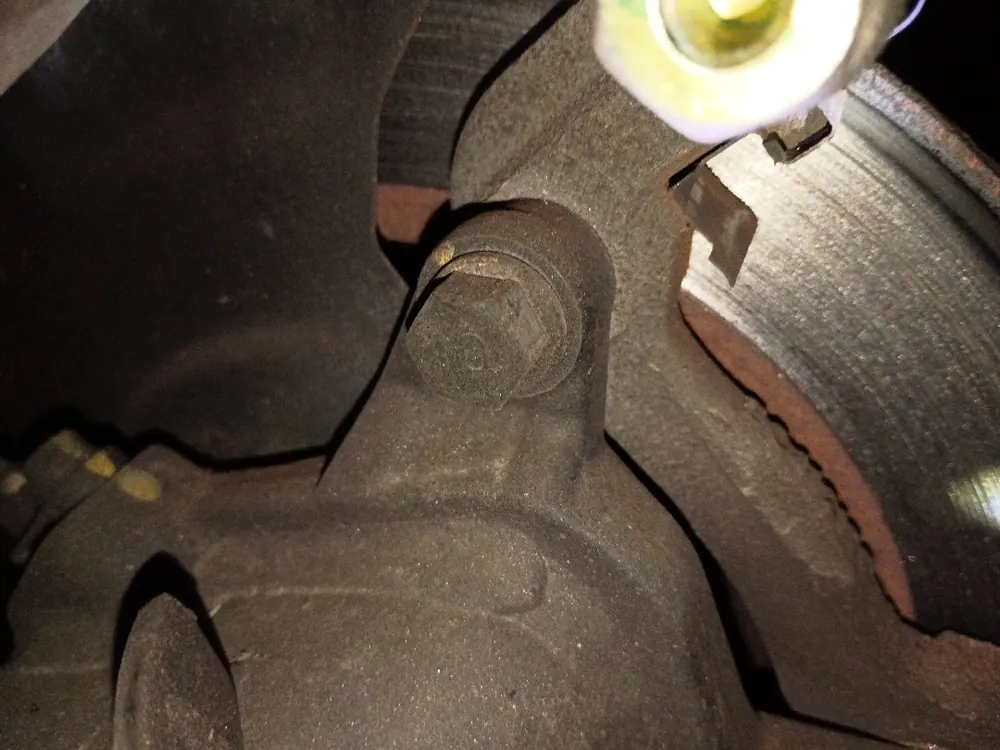
When you press the brake pedal, hydraulic fluid pushes the brake calipers, which squeeze the brake pads against the rotors (also called discs). That friction is what slows the car down. Both parts wear over time, but the pads wear a lot faster.
Brake Pads
Pads are the part of the system meant to be used up. Each one is friction material bonded to a metal backing plate, and it wears down a little with every stop. Once the friction material gets thin, the car stops worse and the backing plate can start cutting into the rotor.
Brake Rotors
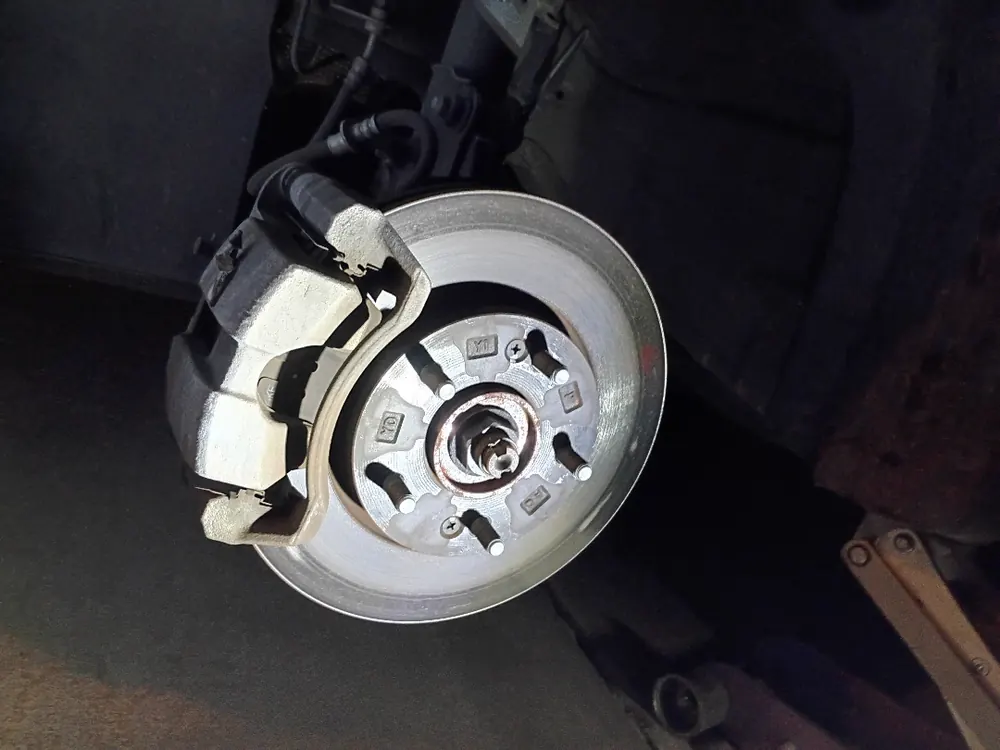
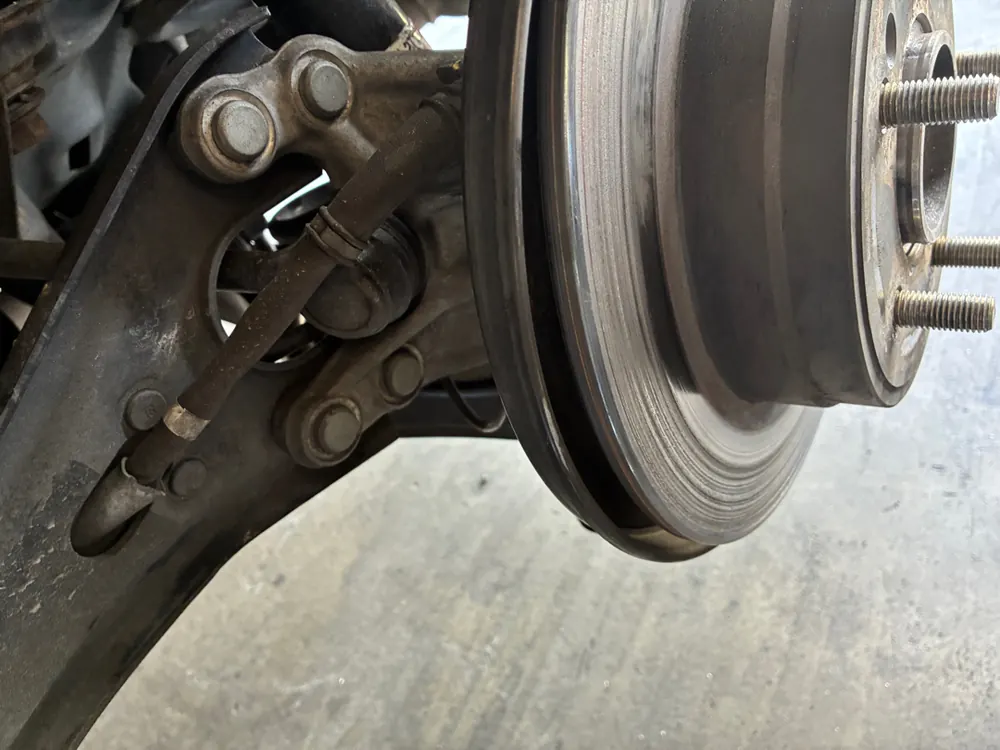
Rotors are the heavy metal discs that the pads clamp onto. They last much longer than pads, but they do wear out. Heat, hard braking and worn pads can cause rotors to warp, develop grooves, or wear below the manufacturer's minimum thickness spec.
When to Replace Brake Pads
How long pads last depends on how you drive, how heavy the vehicle is and what the pads are made of. These are the ranges we see.
| Driving Conditions | Expected Pad Life |
|---|---|
| Highway driving, light braking | 50,000 to 70,000 miles |
| Mixed city/highway driving | 35,000 to 50,000 miles |
| City driving, frequent stops | 25,000 to 40,000 miles |
| Towing or mountain driving | 20,000 to 30,000 miles |
Warning signs your pads are worn:
- Squealing or squeaking: Most pads have a metal wear indicator that makes a high-pitched noise when the pad is thin.
- Grinding noise: This means the pad is completely worn and metal is grinding on metal. Stop driving and get it fixed now. Every stop is cutting into the rotors, and the car will not stop as well.
- Brake warning light: Some vehicles have electronic pad wear sensors that trigger a dashboard light.
- Longer stopping distances: If the car takes noticeably longer to stop, the pads may be glazed or worn.
When to Replace Rotors
Rotors do not need replacing every time you do pads. Replace them in these cases.
- They're below minimum thickness: Every rotor has a minimum thickness stamped on it. A technician measures this with a micrometer. Going below minimum is unsafe.
- They're warped: If you feel pulsating or vibration through the brake pedal when stopping, the rotors are likely warped from heat. This is especially common after hard braking or towing.
- They're deeply grooved or scored: If the rotor surface has visible grooves or ridges from worn pads grinding into it, it needs replacement.
- They've been resurfaced before: Rotors can sometimes be "turned" (resurfaced) to restore a smooth surface, but this removes material. If they've been turned before, there may not be enough thickness left to do it again.
Pads Only vs. Pads and Rotors. How to Know
Match what the inspection finds to this table so you only pay for what the car needs.
| Scenario | What You Need | Typical Cost (per axle) |
|---|---|---|
| Pads worn, rotors still smooth and above minimum thickness | Pads only | $150 to $300 |
| Pads worn + rotors grooved but above minimum thickness | Pads + rotor resurfacing | $250 to $400 |
| Pads worn + rotors warped or below minimum | Pads + new rotors | $350 to $600 |
| Grinding noise (metal on metal) | Pads + new rotors (likely) | $400 to $700+ |
Types of Brake Pads
Pad material changes how the brakes feel, how much noise and dust they make, and how fast they wear your rotors.
- Ceramic pads: Quiet, produce less dust, and are gentle on rotors. Best for daily drivers and most passenger vehicles. Slightly more expensive upfront but last longer.
- Semi-metallic pads: Better heat dissipation and stopping power. Ideal for trucks, towing, and performance driving. They're louder and produce more brake dust.
- Organic pads: Soft, quiet, and cheap, but they wear faster and don't handle heat well. Fine for light-duty commuter cars.
How to Avoid Being Overcharged
Brakes are one of the easiest jobs for a shop to upsell. A few habits keep that from happening to you.
- Ask to see the old pads and measure the rotor thickness. A reputable shop will show you.
- Get a written estimate before authorizing work.
- If a shop says you need rotors, ask for the measurement vs. the minimum spec. If it's above minimum and not warped, resurfacing or reuse may be fine.
- Be careful with "lifetime brake pad" deals. The pads are free, but they charge you for rotors every time.
Supercanic tip: We measure the rotors before we recommend replacing them, and we show you the numbers. If only one part needs work, that is the only part we replace. Call us at (951) 904-2477 to set up a brake inspection.
Hearing Squealing or Grinding? Get a Brake Inspection.
We check pads, rotors and calipers, then tell you what needs replacing and what can stay.