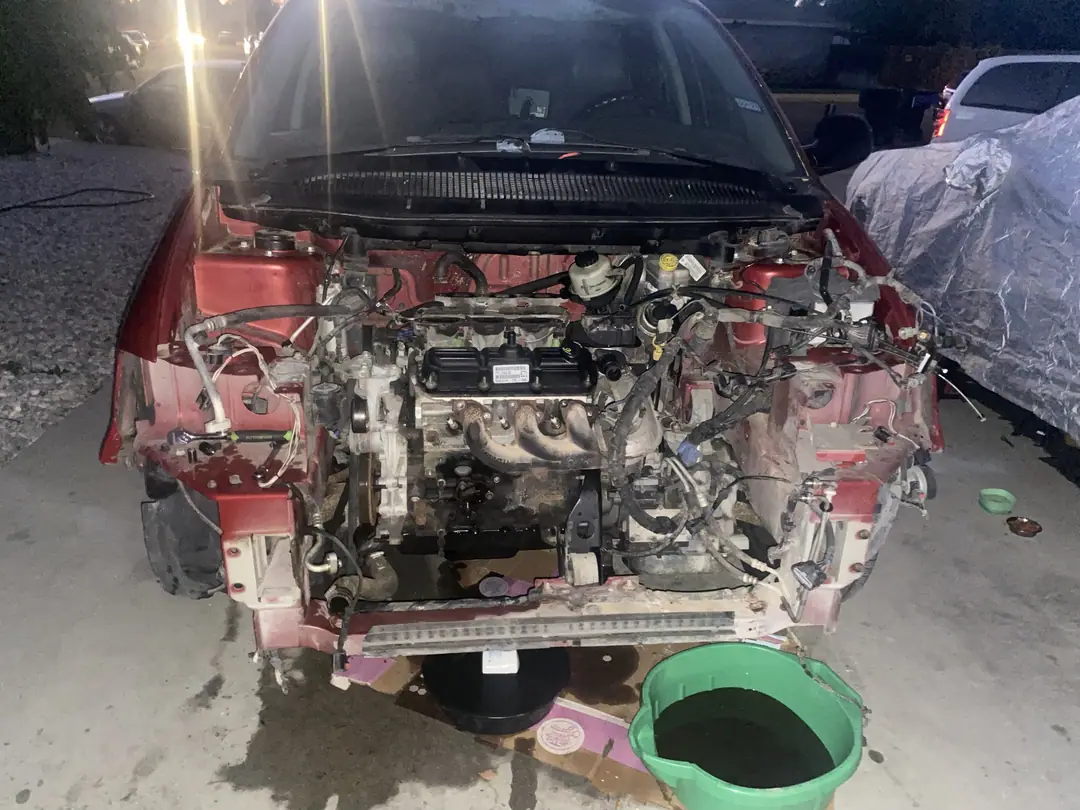
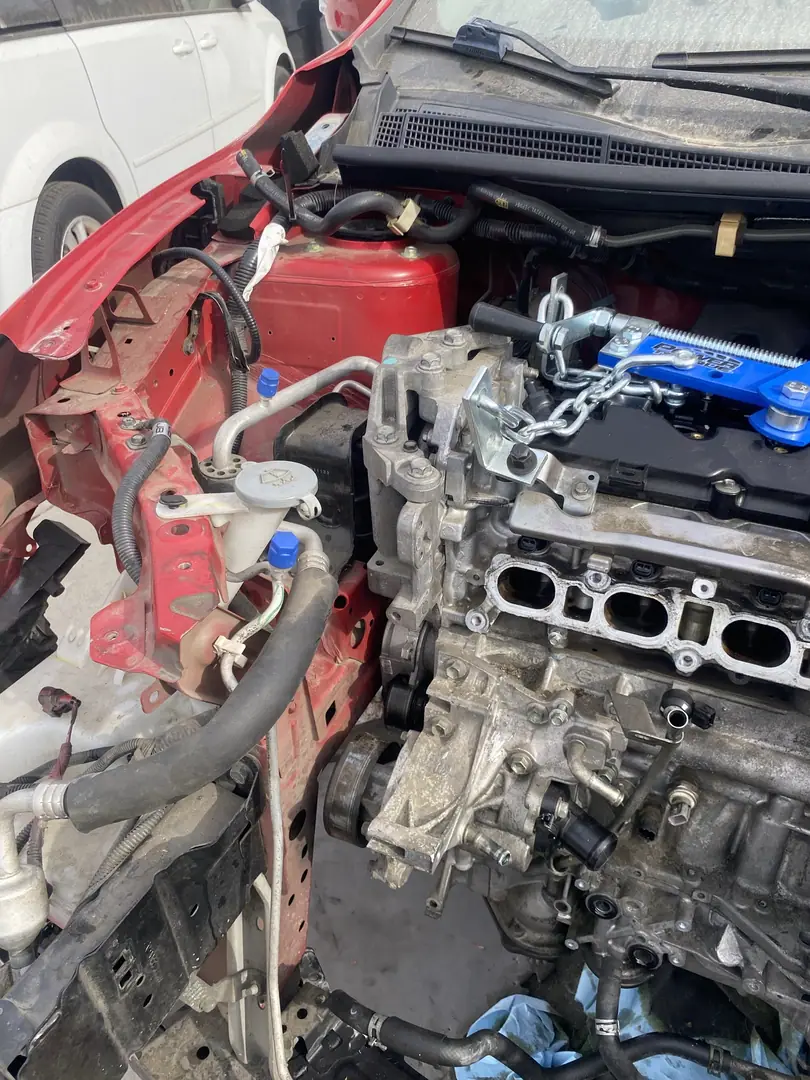
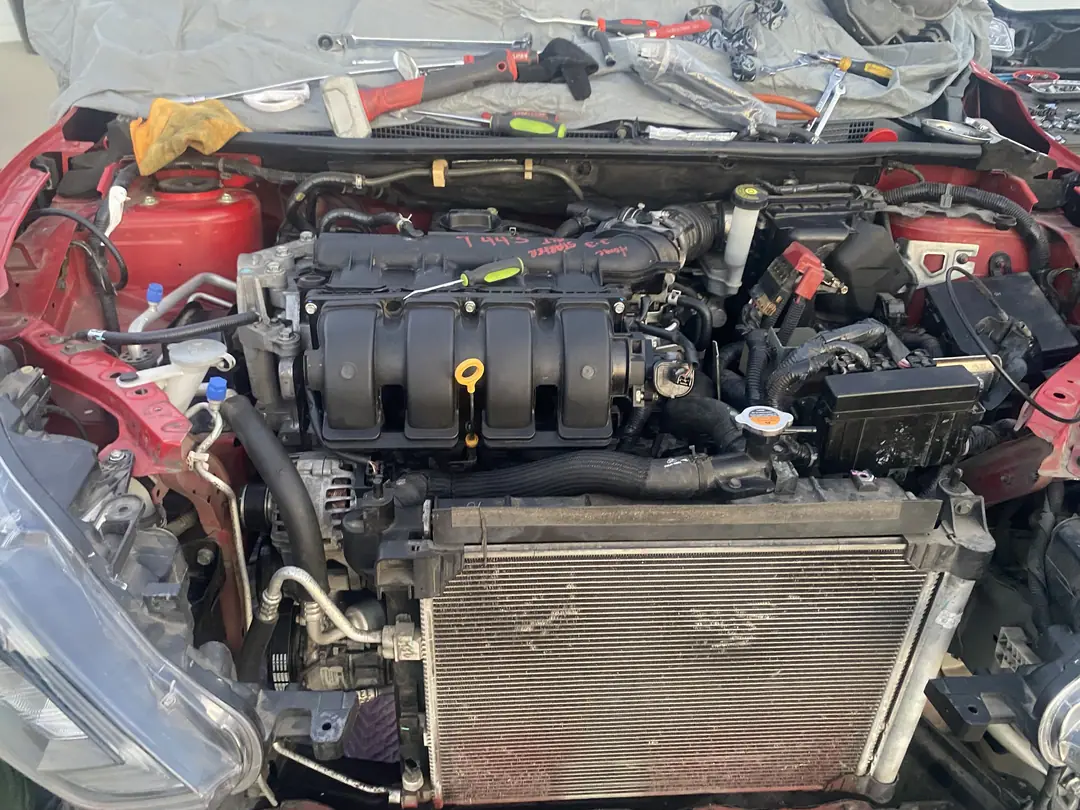
December 2024 was the month we pulled our first full engine in the driveway. The car was a red Nissan. The front clip came off, the engine went up on the hoist, and by the end of the month it was built back and running.
The photos from that job are in the Torn Down, Built Back chapter of Our Story. Here is what they show, and what an engine swap on a small front wheel drive car really involves.
Quick answer: On a compact front wheel drive car, the engine and transaxle often come out together through the front. The bumper, radiator support and cooling stack come off first. A careful swap is mostly labeling, cleaning and moving parts from the old engine to the new one.
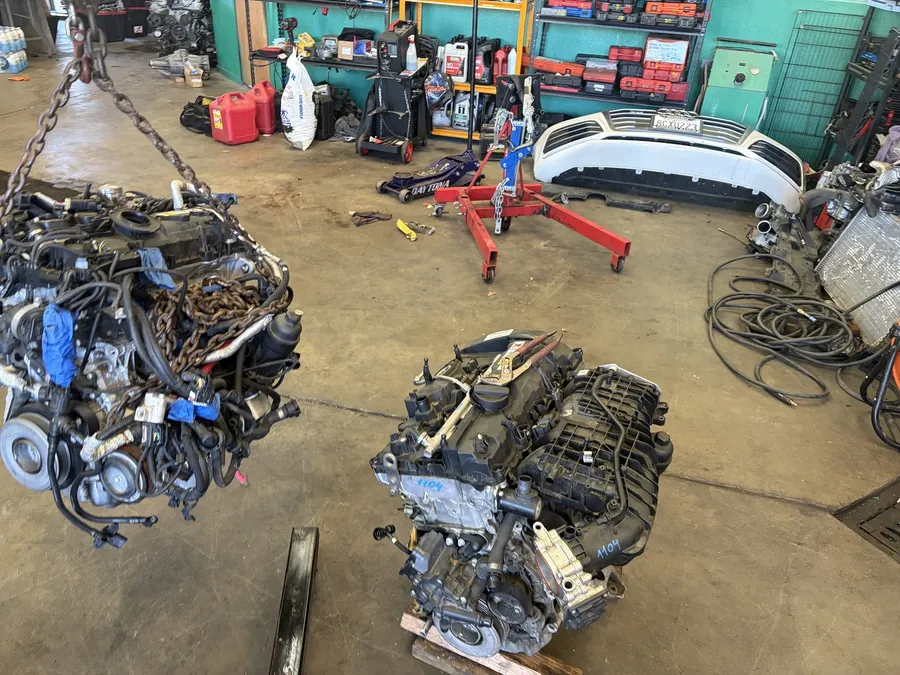
What We Saw
Why the Front Clip Comes Off
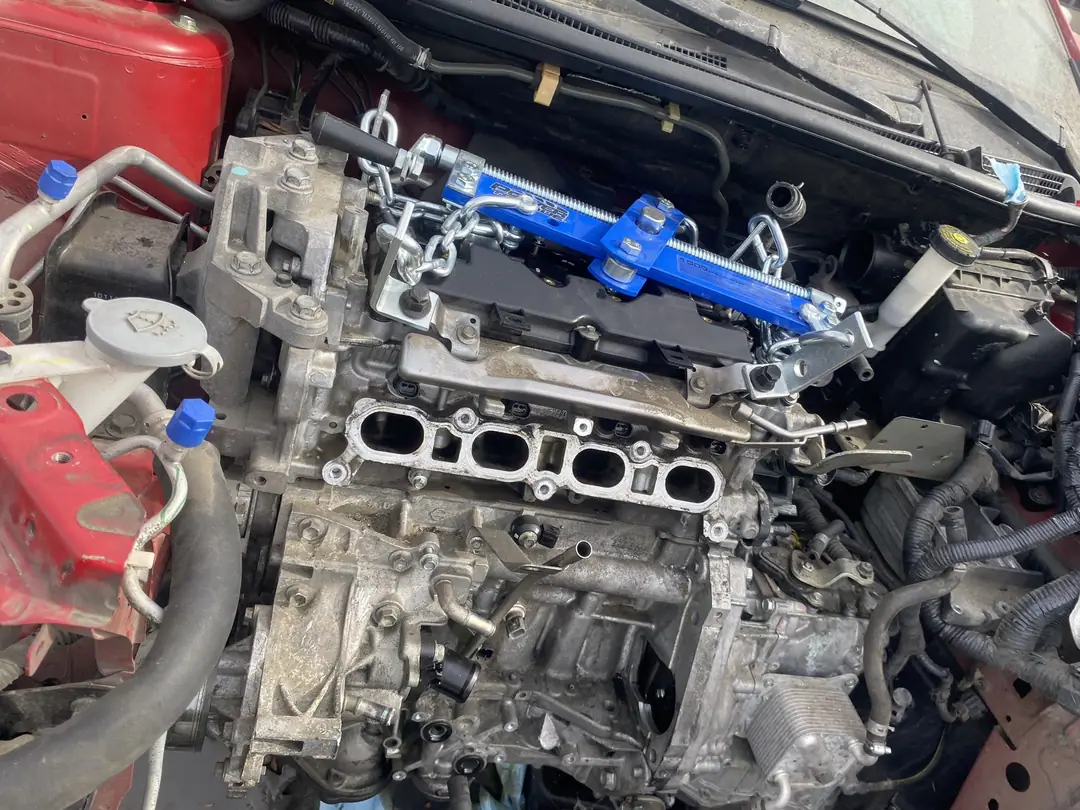
On cars like this there is no room to lift an engine straight up past the hood. Taking off the bumper, the radiator, the condenser and the support in front of them opens a clear path. It looks extreme in the photos. It is the cleanest way in.
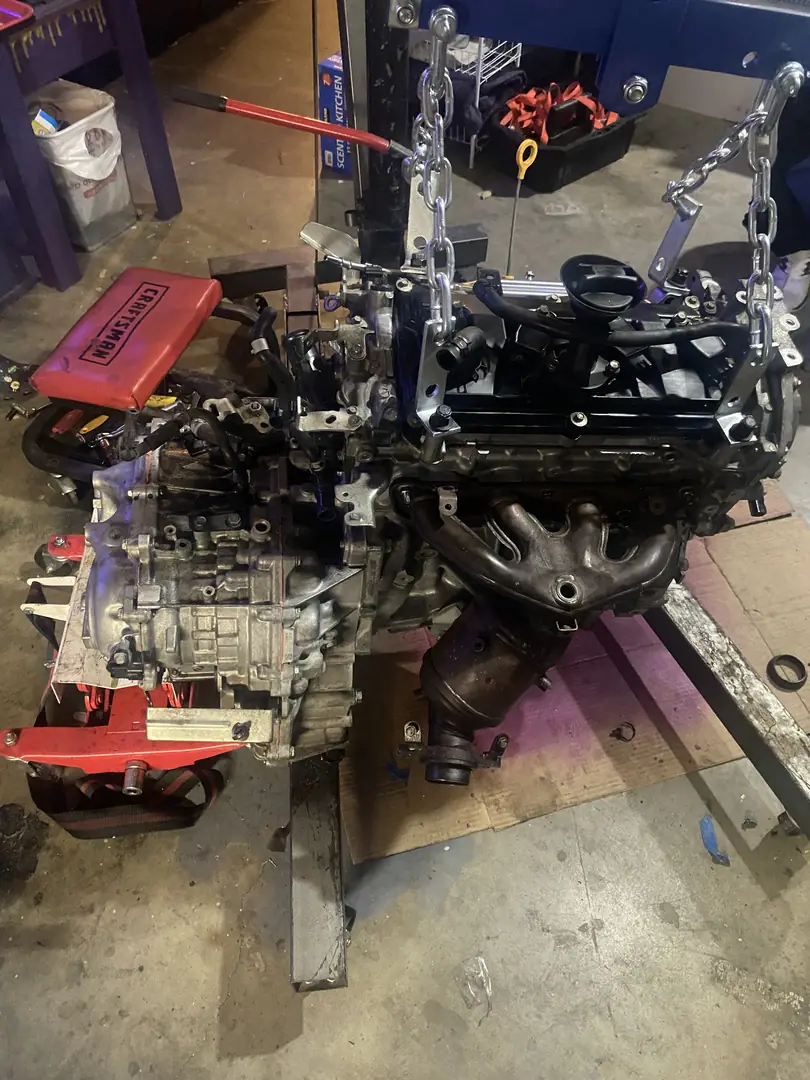
The blue bracket bolted to the top of the engine is a lift plate. It gives the hoist chain a solid place to hold, so the engine stays level while it comes out. A tipped engine can tear a hose or crack a sensor on the way out.
What Gets Moved From Old to New
A replacement engine almost never arrives ready to bolt in. Before it goes in, parts come off the old one and go on the new one. On a typical swap that list includes:
- The intake, throttle body and wiring connectors.
- Sensors that may not come with the new engine.
- Brackets for the alternator, AC compressor and belt.
- Engine mounts, if the old ones are worn out.
Every gasket we disturb gets replaced. Every connector gets checked and cleaned. A swap that runs rough on day one is usually a connector or a vacuum line, not the engine.
First Start and the First Week
Before the first start, we fill and check the oil and coolant and make sure there is oil pressure. After it starts, we bleed the air out of the cooling system and watch for leaks as it warms up. Our photo caption from that month says it simply. Built back. Running.
A new engine still needs watching for the first few hundred miles. Check the oil and coolant level each week at first. Anything that drips or smells hot should be looked at right away, while it is still a small fix.
Questions Owners Ask About Swaps
Will the check engine light come on? It can, if a sensor or connector is wrong. That is why we scan the car after the first start and again after the test drive.
Do I need to change anything else? On a front wheel drive car, the axle seals and engine mounts are worth a look while the engine is out. We show you what we see and you decide.
How long does it take? It depends on the car and on when the engine arrives. We give you a time when we quote, and we call if it changes.
What It Means for Your Car
If your engine is done, a swap can be a smart way to keep a car that is otherwise solid. It is not always the right call. Rust, a worn transmission or a car worth less than the engine can change the math. Our repair or replace guide walks through that decision.
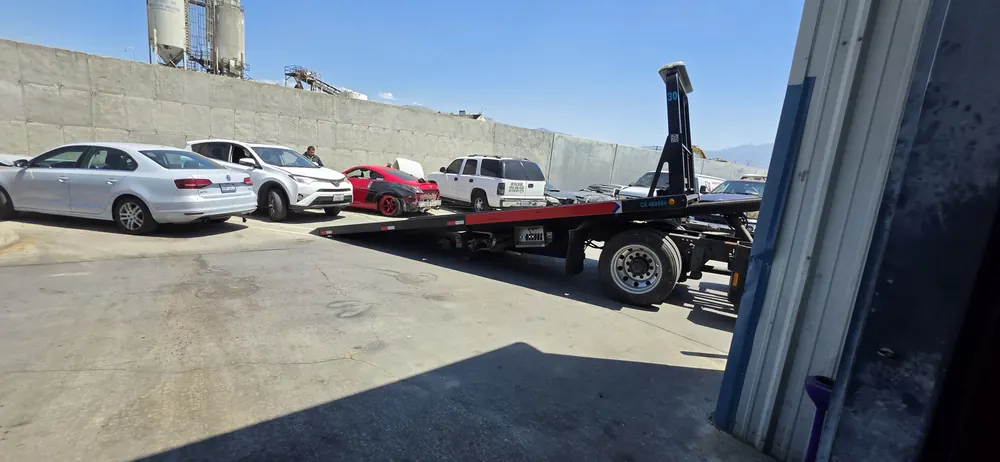
We still do engine swaps, now in our own bays. Read more on the engine repair page, or find us on the San Jacinto page.
Supercanic tip: Ask where the replacement engine comes from and what warranty it carries before you agree to a swap. Call or text (951) 644-1599.
Engine Gone? Ask About a Swap.
We will tell you honestly whether a swap makes sense for your car.