Quick answer. A steering wheel that shakes at highway speed is most often a tire that is out of balance. If it shakes only when you brake, the brake rotors are the likely cause. If it shakes at all speeds, or the car also wanders, a worn suspension part or a damaged tire is more likely. Mild shaking is usually safe to drive on to a shop. Violent shaking is not.
Key Points
- Shaking that starts around 55 to 70 mph and eases off at higher or lower speeds usually points to tire balance.
- Shaking only while braking usually means warped or uneven brake rotors.
- Shaking at every speed can mean a bent wheel, a bulging tire, or a worn tie rod or ball joint.
- A bulge or bubble in a tire sidewall is a blowout waiting to happen. Do not drive on it.
- Shaking in the seat and not the wheel often points to the rear tires.
Read our guides a lot? Star Supercanic as a source in Google and our new posts show up more often in your Top Stories.
What the Shake Is Telling You
| When It Shakes | Most Likely Cause |
|---|---|
| At highway speed, smooth the rest of the time | Tires out of balance |
| Only when you press the brake | Warped or unevenly worn rotors |
| At every speed, getting worse as you go faster | Bent wheel, damaged tire or a loose or worn steering part |
| When you speed up | A worn axle joint or a bad engine or transmission mount |
| Shake plus a clunk over bumps | Worn ball joints, tie rods or control arm bushings |
| Shake after hitting a pothole or curb | Bent wheel, bent suspension part or a tire that was damaged inside |
Tire Balance, the Common Cause
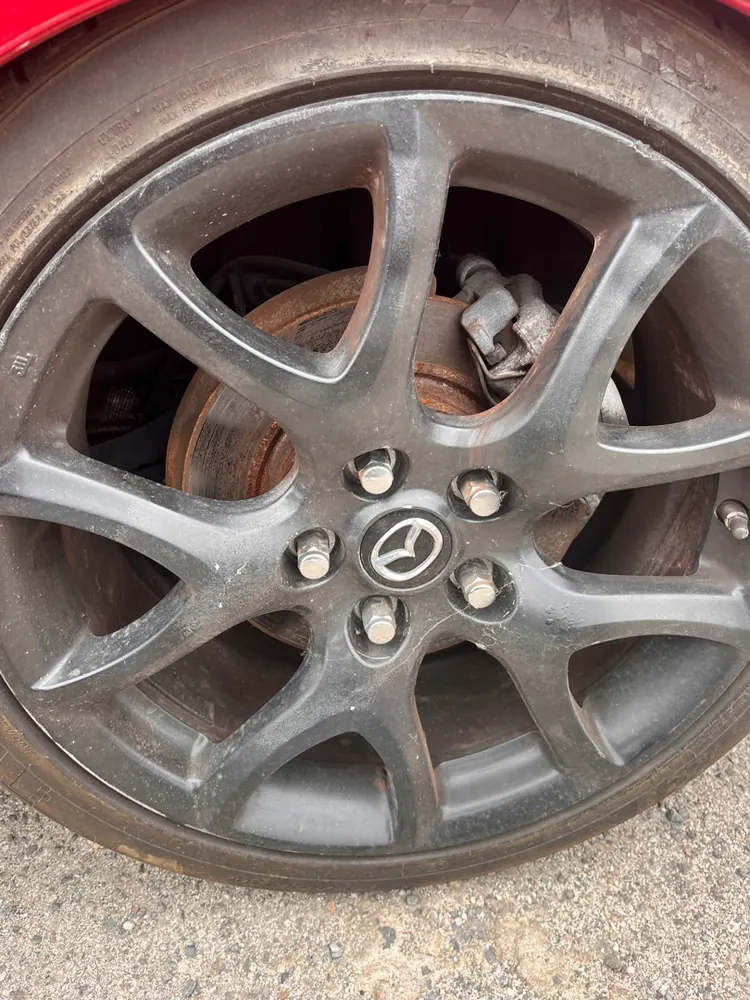
A tire and wheel have to weigh the same all the way around. Small weights are clipped on the wheel to even it out. When a weight falls off, or the tire wears unevenly, the wheel wobbles a little with each turn. At low speed you do not feel it. Around 55 to 70 mph it can shake the whole wheel.
A shop can spin each wheel on a balancing machine and add weights in a few minutes. It is one of the cheaper fixes in this list, so it is the right first guess when the shake is smooth at city speeds.
When It Is the Brakes
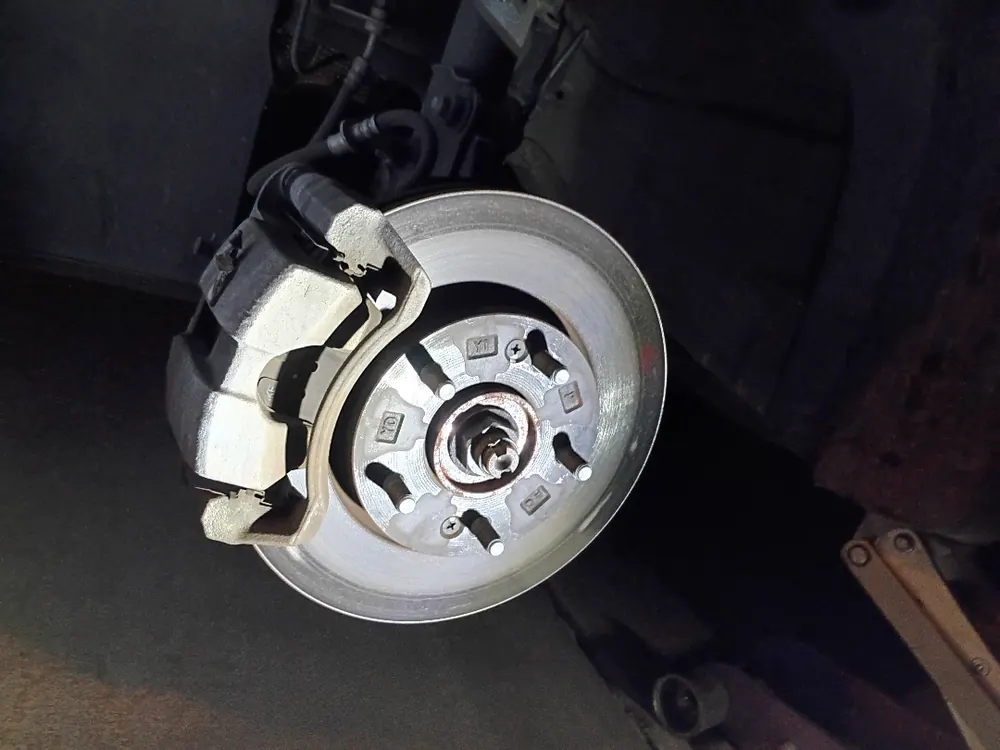
If the wheel only shakes when you slow down from highway speed, the rotors are the first thing to check. Rotors can wear unevenly from heat, and the pads then grab and release as the rotor spins. You feel that as a pulse in the pedal and a shake in the wheel. Our post on brake pads versus rotors explains when rotors can be saved and when they need to be replaced.
When It Is the Suspension
Ball joints, tie rods and control arm bushings hold each wheel in place. When they wear, the wheel can move a little where it should not, and that shows up as a shake or a loose feeling in the wheel. A worn wheel bearing can do it too. These parts do not fix themselves, and a failed one can cause a loss of steering. If you hear clunks over bumps along with the shake, have it looked at soon.
Can I Keep Driving It?
- Mild shake at one speed. Slow down, drive carefully, and book a balance check.
- Shake at every speed, or a wheel that feels loose. Do not take it on the freeway. Get it checked first.
- Bulge in a tire, or a very violent shake. Stop in a safe spot and call for help.
Supercanic tip. We replace shocks, struts, ball joints, tie rods and wheel bearings, and every suspension job gets a road test before you get the keys. Call (951) 904-2477 and tell us when the shake starts.
Frequently Asked Questions
Why does my steering wheel shake at 60 mph but not at lower speeds?
This is the classic sign of a tire that is out of balance. The wobble only gets strong in a certain speed range. A balance check usually fixes it.
Why does my steering wheel shake when I brake?
Most often the brake rotors are uneven or warped, so the pads grip and release as the rotor turns. You often feel a pulse in the pedal too.
Can bad alignment make the steering wheel shake?
Bad alignment more often makes the car pull to one side or wear the tires unevenly. The uneven wear can then cause a shake over time, so the two are related.
Is it safe to drive with a shaking steering wheel?
A mild shake at one speed is usually safe for a short drive to a shop. A shake that is severe, gets worse, or comes with clunks or a loose feel is not. Do not drive on a tire with a bulge.
Can a pothole cause a steering wheel to shake?
Yes. A hard hit can bend a wheel, knock off a balance weight, damage the inside of a tire, or bend a suspension part. If the shake started right after a pothole, have it checked.
Steering Wheel Shaking?
We find the cause, show you the worn part, and road test the fix before you get the keys.