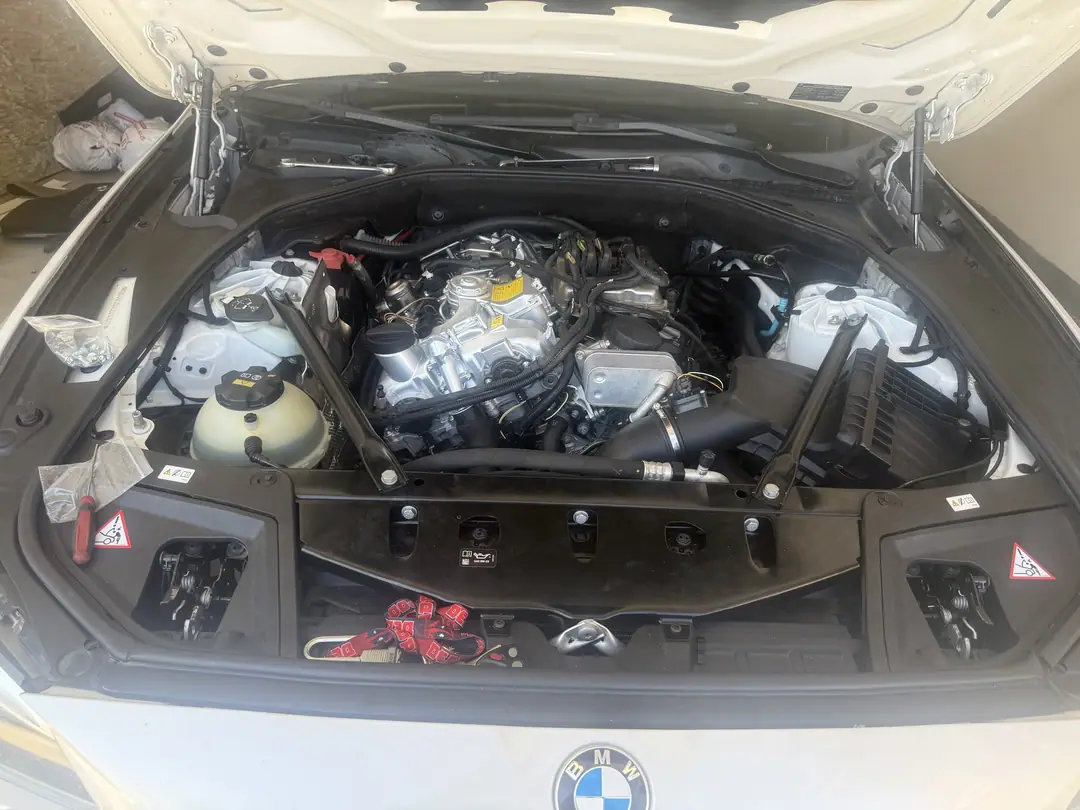
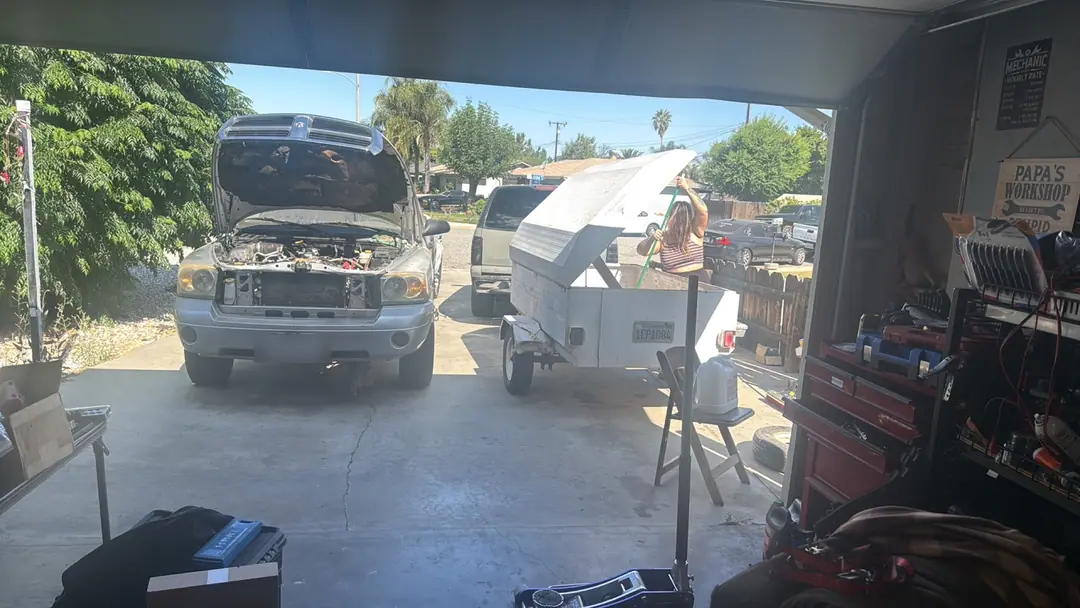
In July 2025 a white BMW 5 Series came into our garage. Our photo shows it with the hood open and the engine covers off, the turbo four cylinder engine in plain view. The oil filter housing sits at the front, and the coolant tank sits off to the side.
We are keeping this one to what the photo shows. It is still a useful look at a German engine bay, and at the places we check first when one of these comes in.
Quick answer: On BMW turbo engines, the most common leaks come from the oil filter housing gasket and the valve cover gasket. Plastic cooling parts also age with heat. A careful look with the covers off finds most of it.
What We Saw
What Is Under the Plastic
Modern BMWs hide almost everything under covers. They look clean, and they also hide leaks. Taking the covers off is step one. It shows the valve cover, the oil filter housing, the coils, the turbo plumbing and the hoses.
The oil filter housing on many BMW engines sits on the side of the block, close to the belt and pulleys. When its gasket leaks, oil can run down onto the belt. A soaked belt can slip, fray and in bad cases get pulled into the engine. That is why we treat that leak as urgent.
What We Check First
- Oil on the filter housing, the valve cover edge and the belt.
- Coolant around the tank, the hoses and the plastic fittings.
- Coil packs and spark plugs if there is a misfire.
- Boost hoses and clamps on the turbo side.
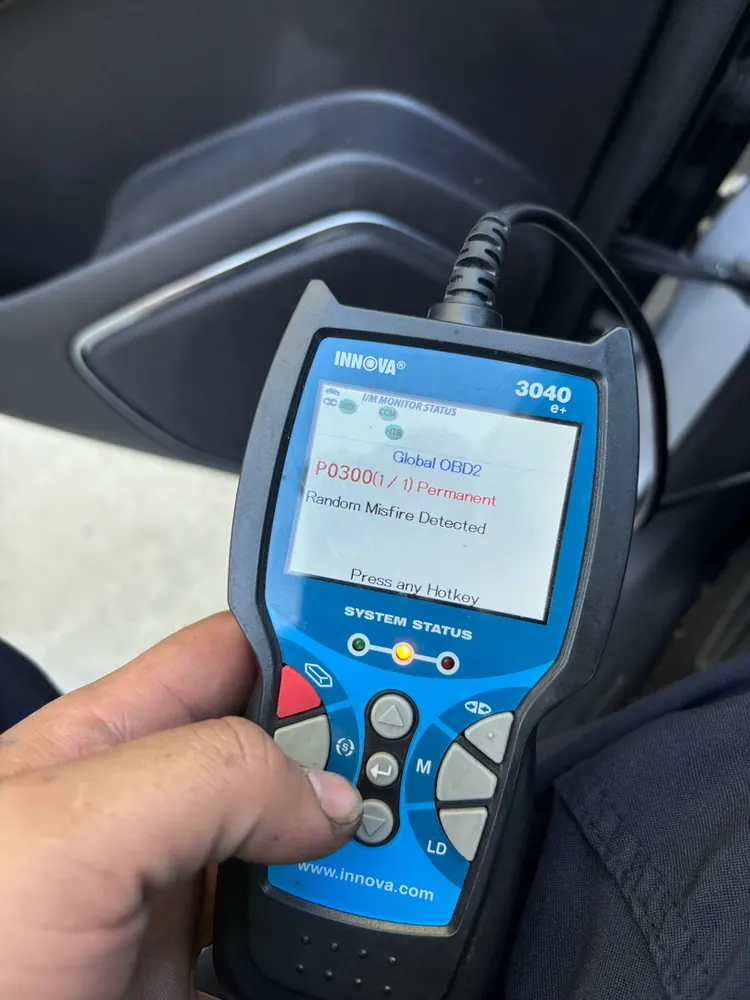
- Stored codes in every module, not just the engine.
German cars talk a lot through their modules. A full scan, not a basic code read, tells the real story. You can read more about how we do it on our diagnostics page.
Plastic and Heat
Many cooling parts on these cars are plastic. The tank, the hose ends and some fittings. Heat cycles make plastic brittle. In Inland Empire summers, that process is faster. A fitting that cracks can dump coolant in seconds, so we look for white crust, wet spots and old repairs every time.
Questions BMW Owners Ask
Do I need a dealer for service? No. Independent shops with the right scan tools and parts can do most work on these cars, and the factory warranty cannot be voided just because you went elsewhere.
Why does my BMW lose coolant with no puddle? Small leaks can drip onto hot parts and burn off. Look for white crust on hoses and fittings. A pressure test finds it.
Is the oil filter housing leak serious? It can be, because of the belt nearby. Get it looked at soon, not at the next oil change.
What oil should I use? The oil your owner's manual lists, with the BMW approval on the bottle. Turbo engines care about this.
What It Means for Your Car
If you smell oil after a drive, or see drips under the front of a BMW, get it checked soon. If the coolant light comes on, stop and let it cool. Driving a turbo engine hot is how a small leak becomes a big bill.
Keep oil changes on time too. Turbo engines are hard on oil. Our oil change guide covers how often. We are at our San Jacinto shop and on the road every day.
Supercanic tip: If your BMW has an oil leak at the front of the engine, ask the shop to check the belt for oil. Call or text (951) 644-1599.
BMW Leaking Oil or Running Rough?
We diagnose European cars too. Shop or driveway.