- Most makers want new brake fluid every 2 to 3 years. Honda says 3 years on the 2016 Civic. Mercedes builds it into Service B every 2 years or 20,000 miles.
- Some makers, like Toyota on the 2012 Camry, only call for an inspection. That does not mean the fluid lasts forever.
- Brake fluid soaks up water. Federal rules let DOT 3 boil as low as 284°F once it is wet, down from 401°F new.
- Fluid at the wheels tests worse than fluid in the reservoir. One 2025 study found gaps of up to 20°C (36°F).
- On our own 2026 estimates, a full flush runs one to two hours at our posted $150 rate, plus $12 to $32 in fluid.
2 to 3 years. That's how often most cars need fresh brake fluid, and it's the window the owner's manuals keep landing in. Jalopnik quotes the 2016 Honda Civic manual saying the fluid needs a change once every three years. A Mercedes-Benz dealer lists it in Service B every two years or 20,000 miles.
Notice what's missing. Miles barely matter. Brake fluid wears out by time, not by how far you drive.
We work on brakes all over Hemet, San Jacinto and the rest of Riverside County. So this guide gives you the maker intervals side by side, what old fluid does on a long grade, how to test it right, and what the job costs on our own estimates.
Read our guides a lot? Star Supercanic as a source in Google and our new posts show up more often in your Top Stories.
What the Makers Say, Side by Side
Your owner's manual is the final word for your car. These four show how wide the range is.
| Car | What the Maker Calls For | Where It Comes From |
|---|---|---|
| 2016 Honda Civic | Every 3 years. The Maintenance Minder shows it as item 7. | Owner's manual, quoted by Jalopnik |
| Mercedes-Benz | Every 2 years or 20,000 miles, as part of Service B | Mercedes-Benz of Easton service page |
| 2012 Nissan Leaf | Every 2 years or 30,000 miles. Every year or 15,000 miles on the severe schedule. | Cars.com |
| 2012 Toyota Camry | No change listed through 12 years or 120,000 miles. Inspect it on schedule. | Cars.com |
The Leaf and Camry rows come from Cars.com, which compared both schedules.
That Camry line trips people up. "Inspect" is not "never." It means someone has to look at the fluid and test it, and change it when it fails. If nobody has done that in five years, assume it is due.
Got a car that tows, sits in heat or climbs a lot of hills? Look for the severe schedule in your manual. The Leaf's shows how much shorter it can be. It cuts the interval in half.
Why Brake Fluid Goes Bad When It Looks Fine
Most brake fluid is glycol based, and glycol pulls water out of the air. It works its way in over time, even in a closed system. Brake maker Bendix says most fluid takes on about 2% water in just 12 months.
Water lowers the boiling point. That's the whole problem.
Federal Motor Vehicle Safety Standard 116 sets the floor. Under 49 CFR 571.116, new DOT 3 fluid has to boil no lower than 401°F. The "wet" test, run on fluid that has soaked up water, only asks for 284°F. DOT 4 has to hit 446°F new and 311°F wet.
How Far the Boiling Point Falls When Fluid Gets Wet
So wet DOT 3 can lose more than 100 degrees and still meet the rule. Fresh out of the bottle it's fine. A few years in, it's a different fluid.
Why does boiling matter? Liquid does not squeeze, but steam does. When fluid at the caliper boils, you get bubbles in the line. The pedal goes soft and sinks, and the car takes longer to stop. Cars.com calls about 3% water the edge of the danger zone.
Color tells you less than you'd think. Fluid can look clear and still carry water. Dark fluid is a warning, but clean looking fluid is not a pass.
Heat, Hills and the Drive Down Highway 74
Most driving never gets brake fluid near its boiling point. A long downhill does.
Think of the drive down Highway 74 from the mountains into Hemet, or the grade on the 243 out of Idyllwild. You ride the brakes for miles. The pads and rotors heat up, and that heat soaks into the caliper and the fluid behind the piston. Add a trailer, a full load of people, or a hot afternoon, and old fluid is the weak link.
This is where a 2 year old car and a 7 year old car part ways. Both feel the same around town. Only one of them still has a firm pedal at the bottom of the mountain.
A few habits help no matter how old your fluid is.
- Drop a gear on long grades. Let the engine hold the car back so the brakes get breaks.
- Brake firm, then let off. Steady light dragging builds more heat than short firm stops.
- Pull over if the pedal gets soft. Let things cool. Then get the fluid tested before the next trip up.

How to Test Brake Fluid the Right Way
There are three common tests. They do not all tell you the same thing.
| Test | What It Checks | Watch Out For |
|---|---|---|
| Moisture pen | Dips into the reservoir and reads water content | Cheap ones under $10 may carry no accuracy rating, per Cars.com |
| Test strip | A paper strip that changes color with the fluid's condition | Only reads the fluid you dip it in |
| Boiling point tester | Heats a sample and reads the real boiling point | Costs more, so mostly a shop tool |
All three share one blind spot. They test the reservoir, the fluid you can reach under the hood. The fluid that matters sits at the wheels.
A 2025 study in Acta Technologica Agriculturae tested brake fluid from 100 vehicles. On 39 of them, the team sampled both the reservoir and the caliper. Fluid from the reservoir had the higher boiling point, by up to 20°C in some cars. And 28% of those 39 failed at every point they tested. The study also found older, higher mileage cars tended to have lower boiling points.
That's why a passing reservoir test is not the end of the story on an old car. If the fluid has never been changed and the car is past the maker's interval, change it. Testing helps most on a car with known history.
What a Brake Fluid Flush Costs With Us
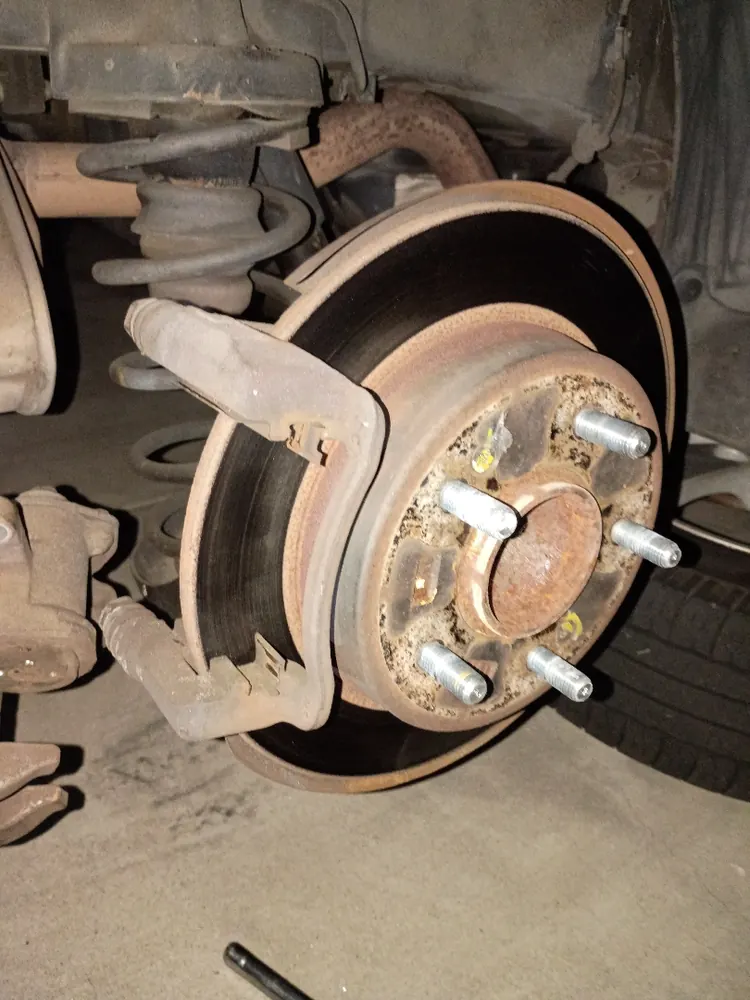
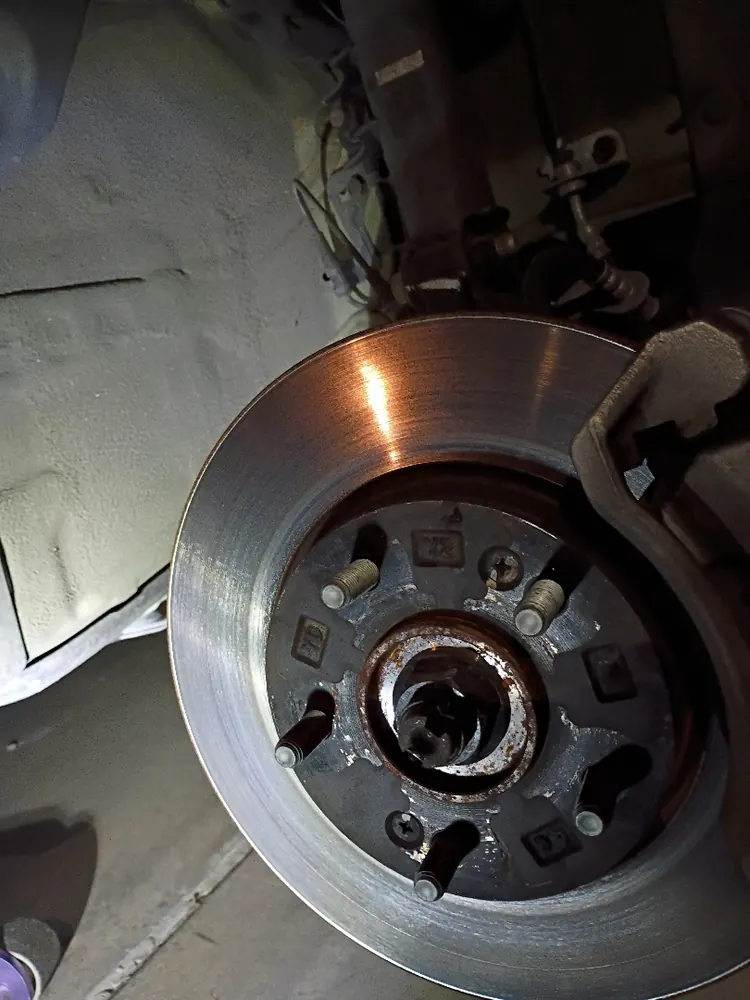
A flush pushes all the old fluid out of the lines and calipers and fills the system with new. A top off only adds fluid to the reservoir. It does nothing for the water already in the lines.
Our numbers come from our own Shop Desk estimates written in 2026. A full flush or a bleed at all four corners was written at one hour of labor, which is $150 at our posted rate. One full maintenance visit wrote it at two hours, $300. Fluid ran $12 to $32 a job, depending on the bottle and the type. So most flushes land around $160 to $330 before tax.
A partial bleed is cheaper. When we swap one caliper, we bleed that corner, and on one paid job that line was $75. But that only refreshes one wheel.
Already planning brake work? Do the flush at the same visit. The car is up and the wheels are off. See our brake job cost guide for what pads and rotors run, and how long rotors last if you're not sure what you need.
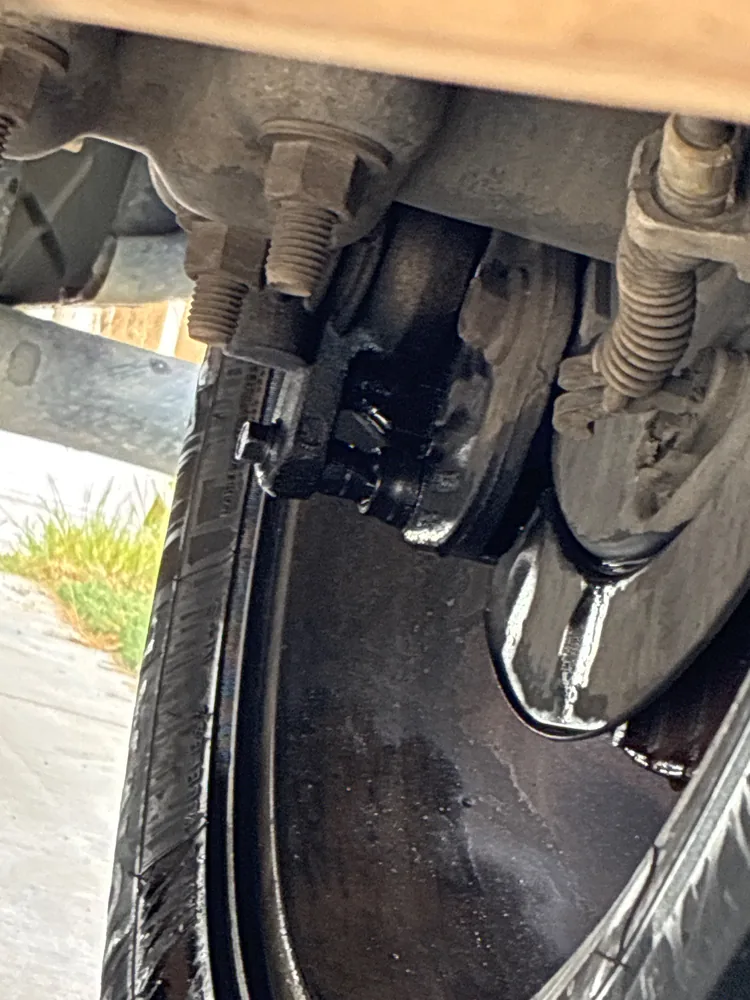
Signs You Should Not Wait for the Calendar
The interval is the plan. These signs mean get it checked now.
- A soft or sinking pedal. Air, water or a leak. Do not keep driving on it.
- The red brake light is on. It can mean low fluid, and low fluid usually means a leak or worn pads.
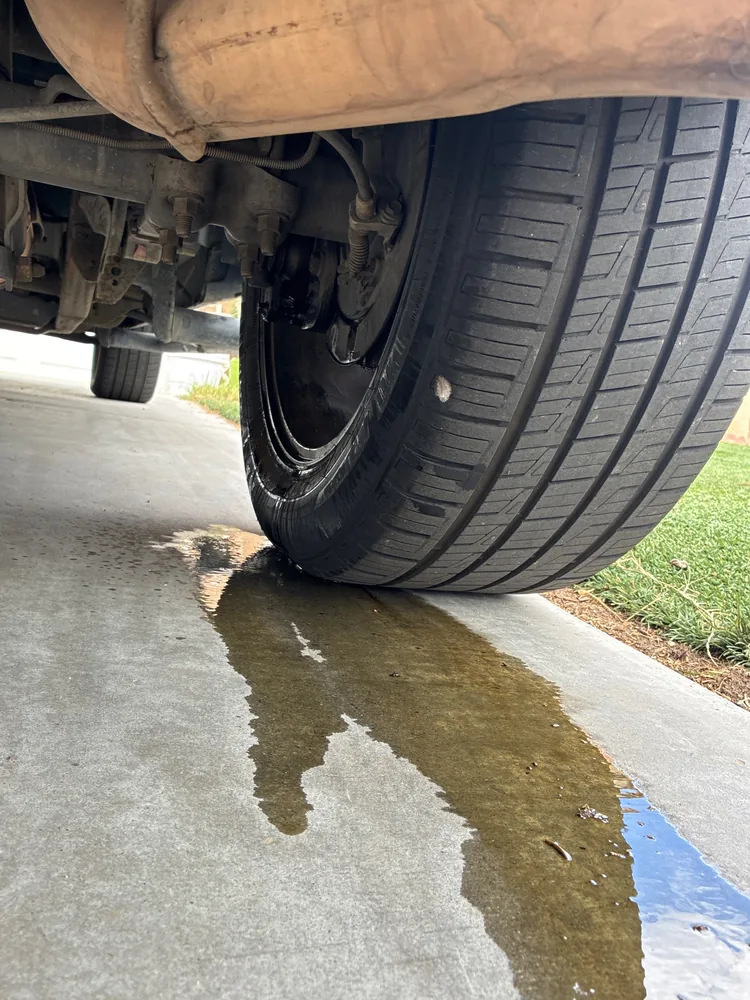
- Wet spots near a wheel. Like the Silverado above. Our post on that Silverado brake fluid leak shows how fast it went soft.
- Dark or cloudy fluid. Not a test result by itself, but a good reason to test.
- A pedal that fades on a long downhill. That's boiled fluid talking. Get it flushed before the next grade.
Supercanic tip. Can't remember the last flush? Ask us to check the fluid at your next oil change or brake job. If you're in Riverside County, call (951) 904-2477. We can come to you, test it, and text a written estimate at our posted $150 rate before any work starts. Our brake service page covers the rest.
Quick Hits
- How often should brake fluid be changed?
- Most makers say every 2 to 3 years. Honda lists 3 years on the 2016 Civic, and Mercedes lists 2 years or 20,000 miles. Check your owner's manual for your car.
- Is a brake fluid flush really necessary?
- Yes, on the maker's schedule. Brake fluid soaks up water over time, and water lowers the boiling point. Old fluid can boil on a long downhill and make the pedal go soft.
- Can brake fluid last 5 years?
- It can still be in the car at 5 years, but on most cars it is past due. Some makers only call for an inspection. If it has not been tested or changed in 5 years, change it.
- What happens if you never change brake fluid?
- It keeps taking on water. The boiling point drops, so hard braking can boil it and cause a soft pedal.
- How much does a brake fluid flush cost?
- On our 2026 estimates, a full flush runs one to two hours at our posted $150 rate, plus $12 to $32 in fluid. That is about $160 to $330 before tax.
- Can I just top off my brake fluid?
- A top off adds fluid but leaves the old, wet fluid in the lines. And if the level dropped, find out why. Low fluid often means worn pads or a leak.
What We Read
49 CFR 571.116, Standard No. 116, Motor Vehicle Brake Fluids
Šarkan, Loman, Kosiba and Paumer, Measurement of Brake Fluid Boiling Point, Acta Technologica Agriculturae June 2025
Cars.com, How Often Do I Need to Change My Brake Fluid? August 13, 2023
Jalopnik, What Your Honda's Maintenance Minder Codes Actually Mean October 26, 2025
Mercedes-Benz of Easton, Mercedes-Benz B Service
Bendix, Learn How to Change Your Brake Fluid September 22, 2015
Supercanic Shop Desk estimates and invoices with brake fluid work, 2026
Pedal Feeling Soft?
Get the fluid tested before the next trip up the mountain. We cover Hemet, San Jacinto and the rest of Riverside County.