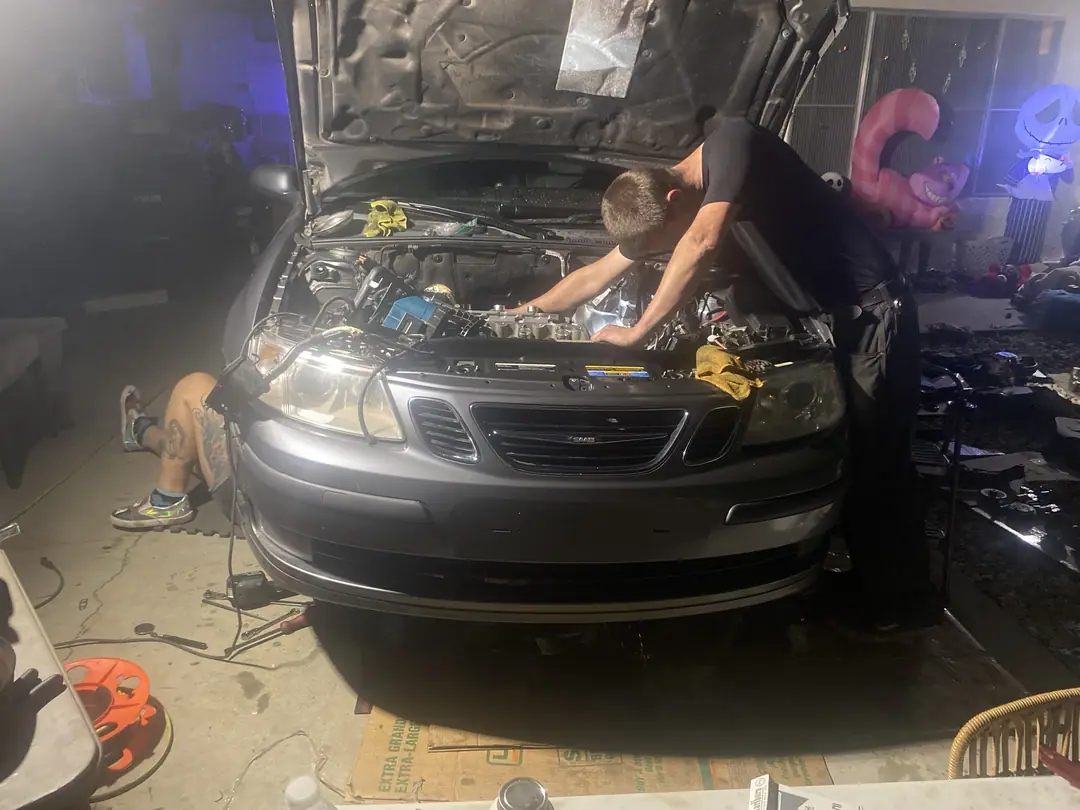
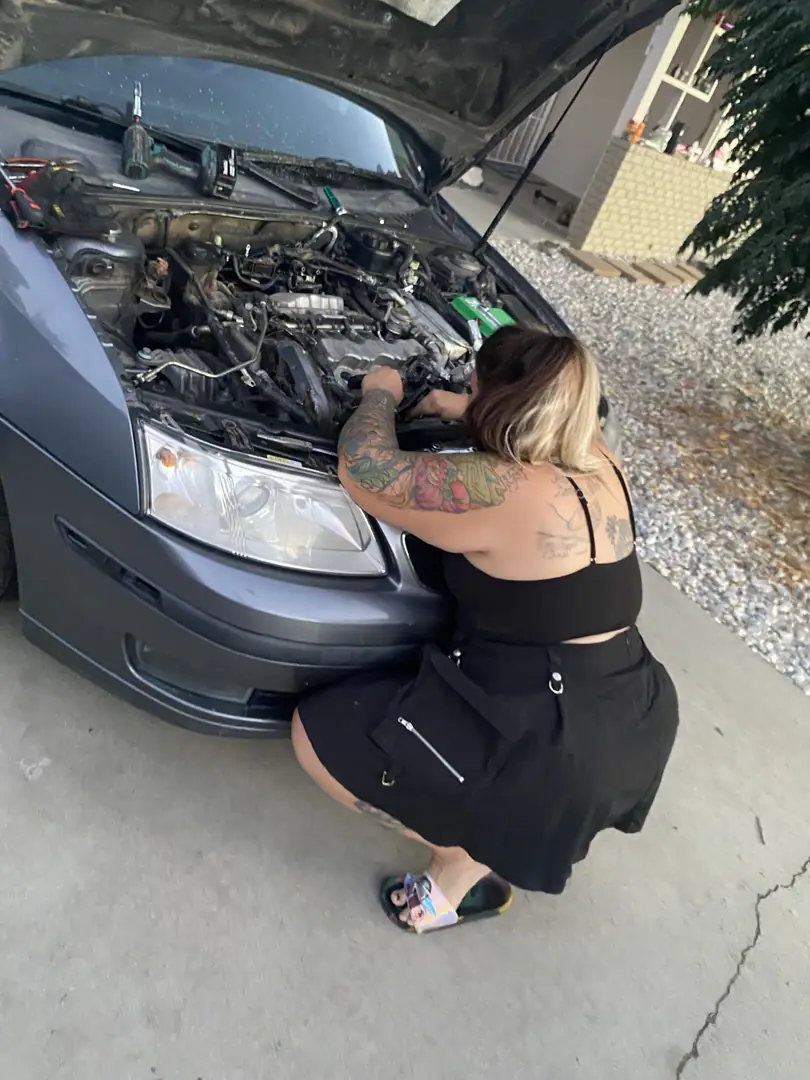
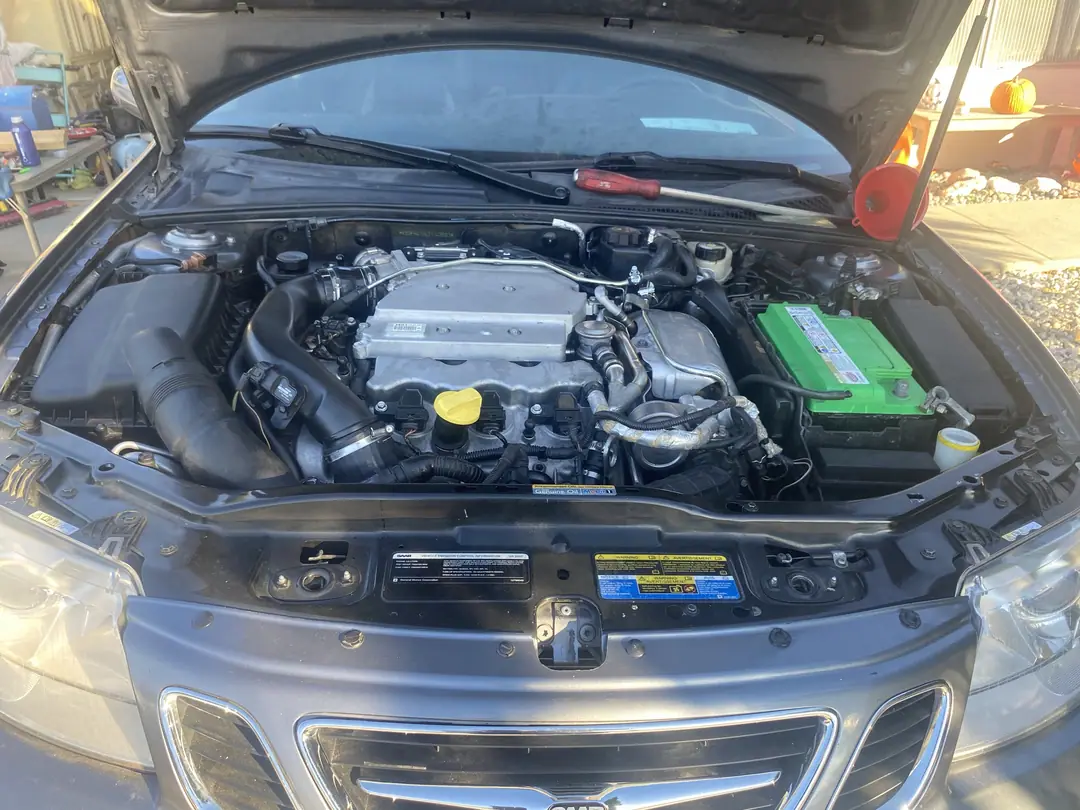
Every shop has a first job. Ours was a head gasket, in October 2024, in a driveway. There was no lift and no bay. There was a gray Saab 9-3, a floor jack, a work light and a lot of patience.
We still have the photos from that month. They are the start of the story on our Our Story page, and they are a good way to explain one of the most feared repairs a car owner can hear about.
Quick answer: A head gasket seals the gap between the engine block and the cylinder head. When it fails, coolant, oil and combustion gas end up where they do not belong. It can be fixed, but it has to be confirmed with a test first, not guessed from one symptom.
What We Saw
What a Head Gasket Actually Does
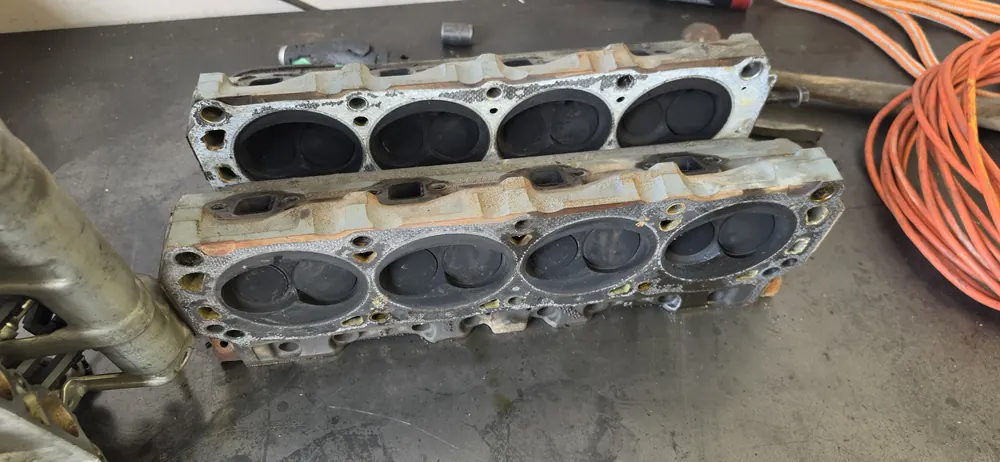
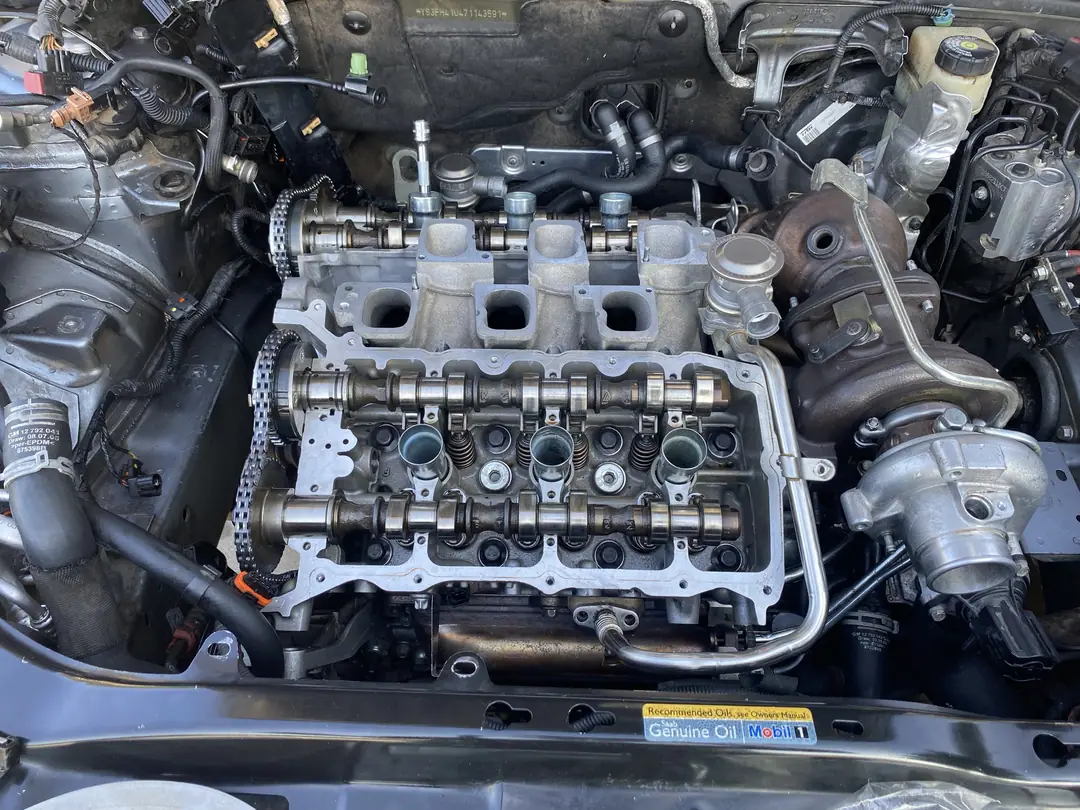
An engine is two big pieces bolted together. The block holds the pistons. The head sits on top and holds the valves and camshafts. The head gasket is the thin layer between them.
It has three jobs at once. It holds in the pressure from every combustion stroke. It keeps coolant in its own passages. It keeps oil in its own passages. If it lets go in one spot, those three things start to mix or leak out.
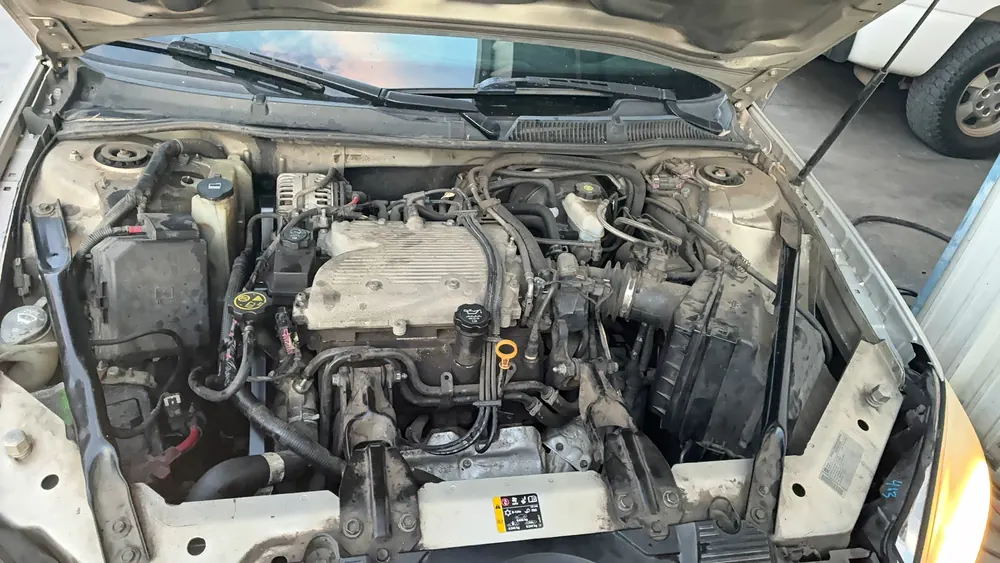
The Saab in our photos has a turbocharged V6. A turbo engine makes more pressure in each cylinder, so the seal has more to hold back. Heat matters just as much. An engine that overheats even once can warp the head, and a warped head will not seal on any gasket.
Signs That Point at a Head Gasket
- Coolant that keeps going down with no puddle under the car.
- White, sweet smelling exhaust that does not clear up once the engine is warm.
- Overheating, especially on a long climb or in traffic.
- Bubbles in the coolant reservoir with the engine running.
- Milky, tan sludge under the oil cap or on the dipstick.
None of these prove it alone. A cracked hose, a bad radiator cap or a failed water pump can cause some of the same things. That is why we test before we quote.
How We Confirm It Before Anything Comes Apart
We pressure test the cooling system to find outside leaks first. Then we run a combustion leak test, which checks the coolant for exhaust gas. A compression or leak down test tells us which cylinder is losing its seal. You can read more about how we work through a problem on our engine repair page.
Once the head is off, the gasket is only part of the job. The head gets checked for flatness and cracks. The block deck gets cleaned and checked too. New head bolts go in on most modern engines, because many are made to stretch once and not be reused.
Questions Owners Ask About Head Gaskets
Can a sealer in a bottle fix it? Sometimes it slows a very small leak for a while. It does not fix a warped head, and it can clog a heater core or radiator. We treat it as a stopgap, not a repair.
How long does the job take? It depends on the engine. A four cylinder with good access is far less work than a V6 tucked under a cowl. We give a time with the quote.
What It Means for Your Car
A head gasket is a big job, but it is not always the end of the car. Caught early, it is usually worth fixing. Driven hot for weeks, it can take the head, the bearings or the whole engine with it.
So if your temperature gauge climbs, pull over and shut it off. If you keep adding coolant, get it tested. The test costs far less than the damage that comes from waiting.
That first Saab taught us the rule we still work by. Test it, show the owner, then fix it. Today we do the same work in our own bays in San Jacinto, and we still come to driveways. See the San Jacinto shop page for hours and directions.
Supercanic tip: If a shop says head gasket, ask which test proved it. A good answer names a test, not just a symptom. Call or text (951) 644-1599.
Losing Coolant or Overheating?
Bring it to the shop in San Jacinto, or we can test it where it sits.