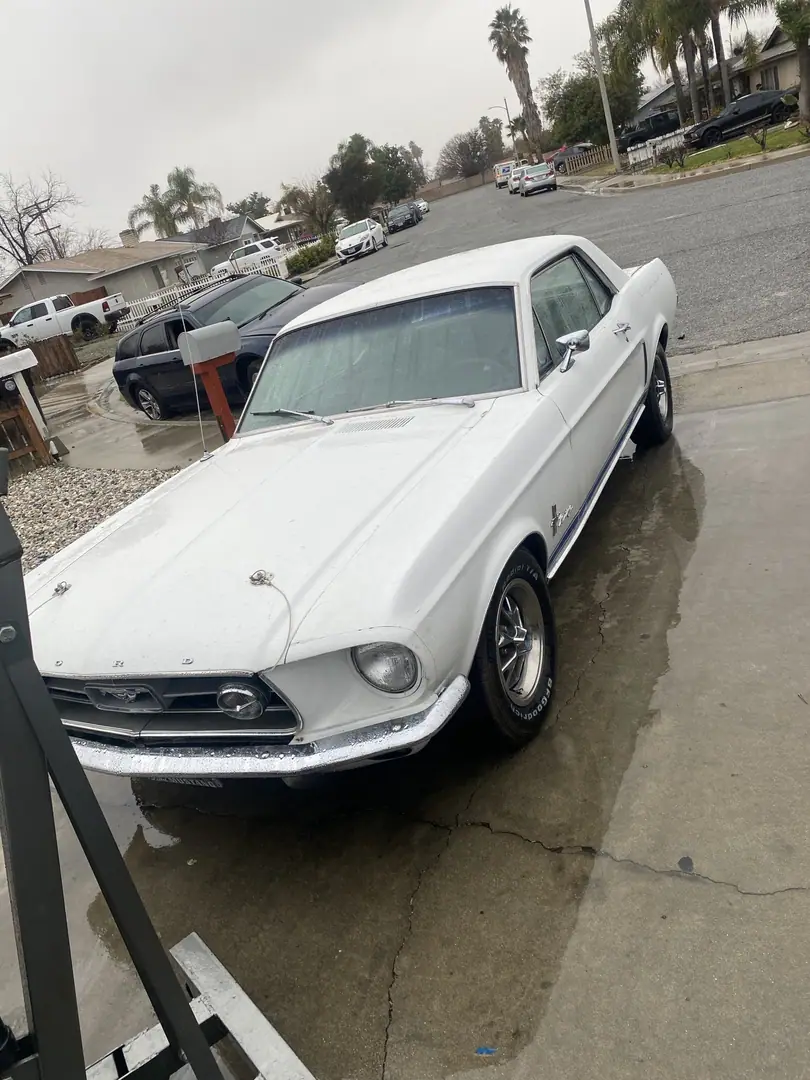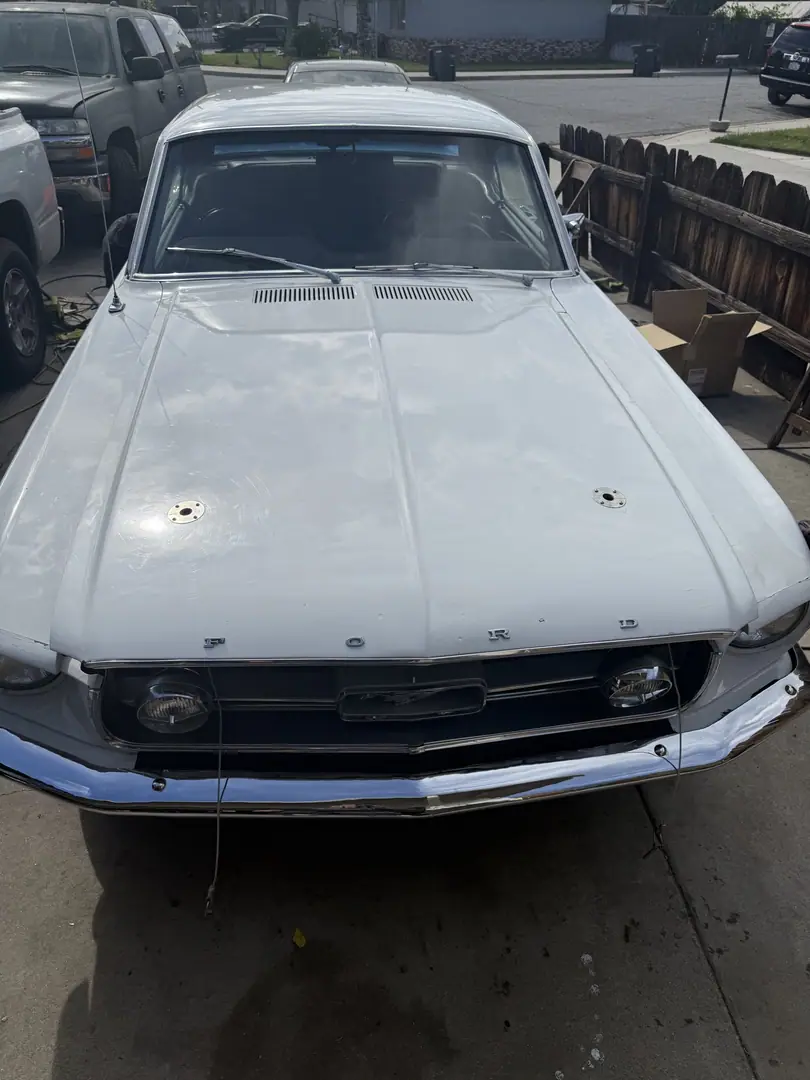
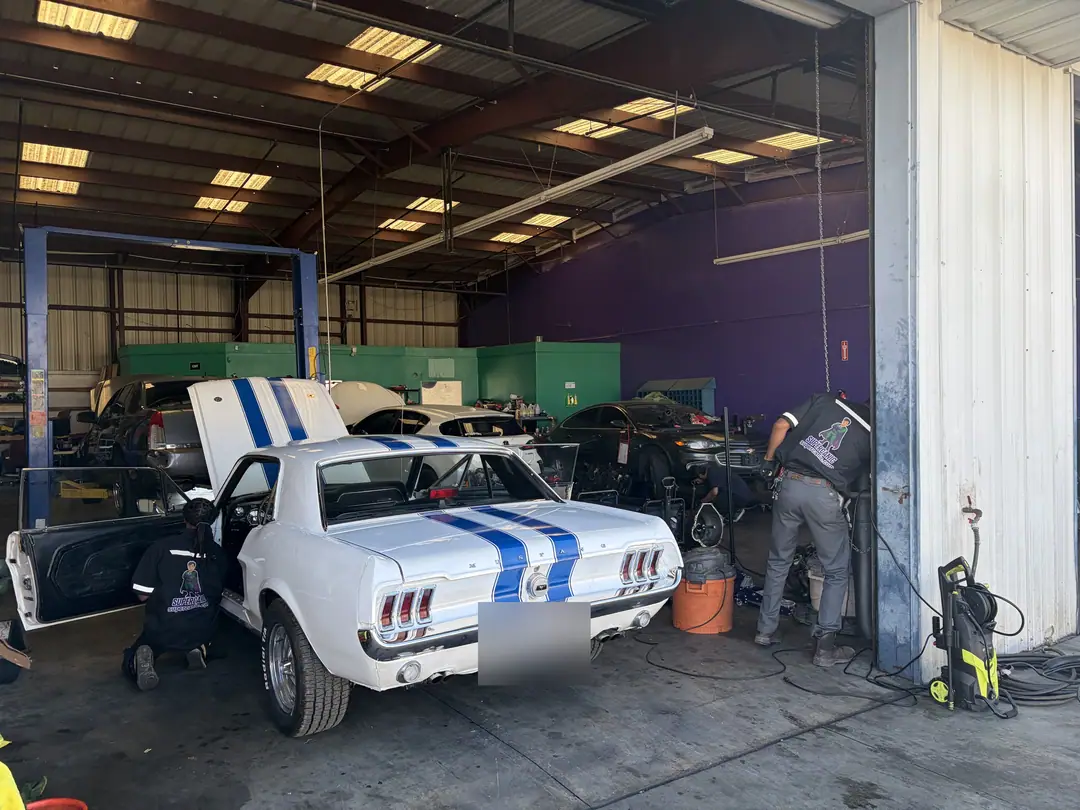
In February 2026 the white 1967 Mustang was done. It had arrived in our driveway a year earlier. It left our bays with a rebuilt engine and blue stripes. Our photo caption for that month is one word long. Done.
This is part three. Part one covered the arrival and part two covered the summer. Here is how the last stretch went, from the engine coming out to the finished car.
Quick answer: The engine came out in October 2025. The car moved into our new bays in December. The rebuilt engine went back in during January 2026, along with blue wires and blue stripes. In February it was finished.
What We Saw
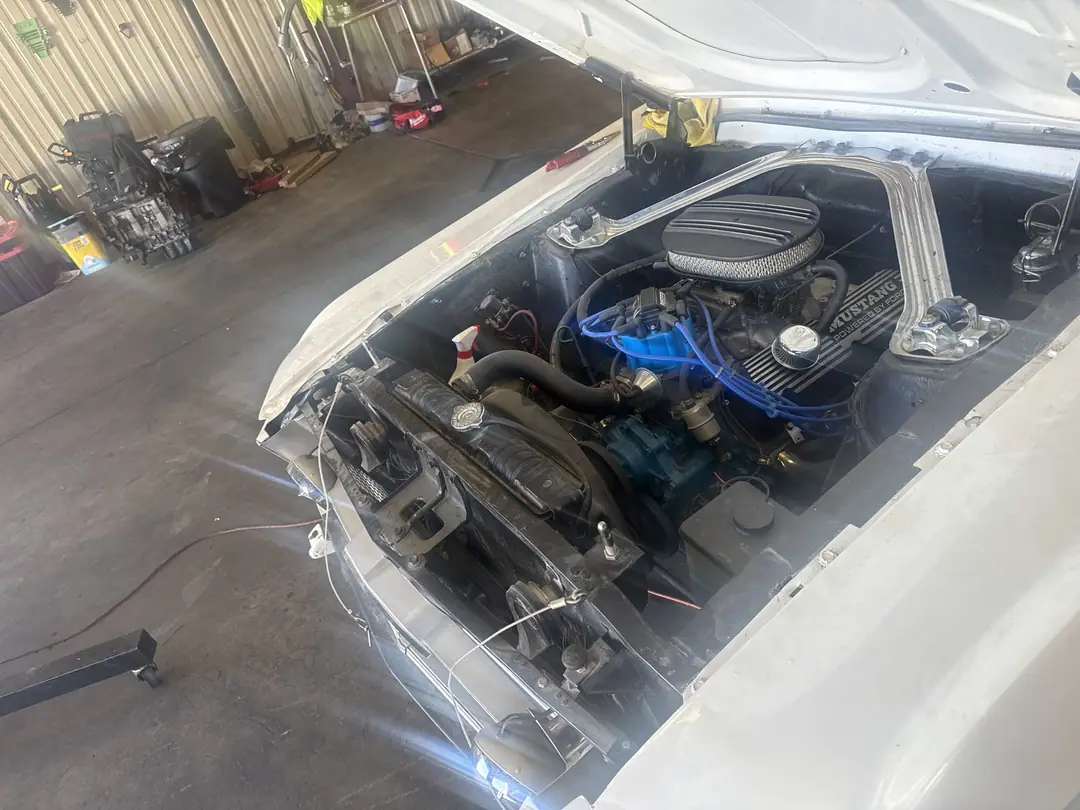
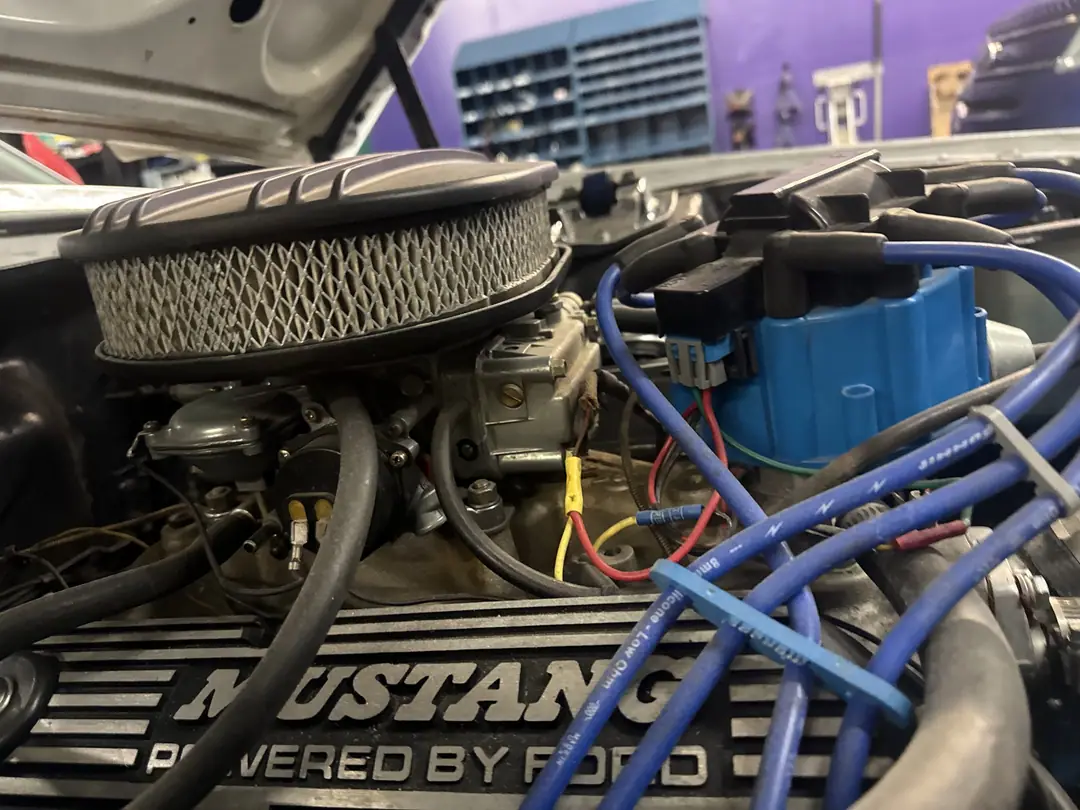
October. The Engine Comes Out
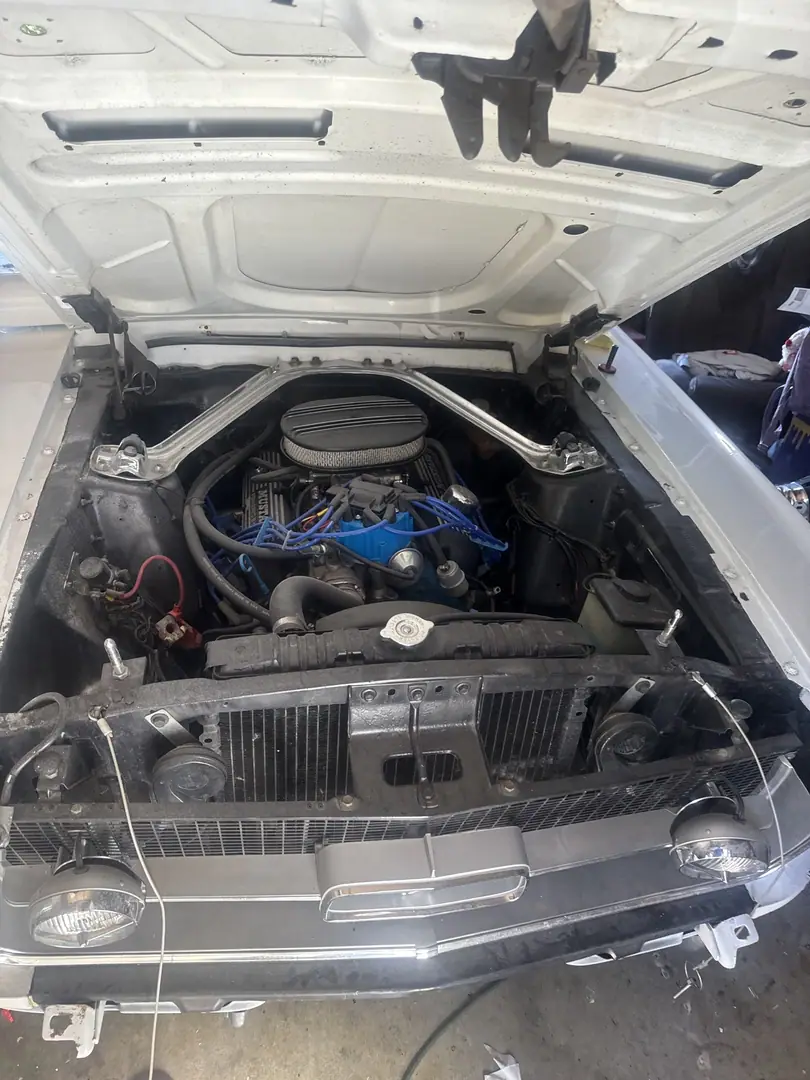
October was also when the body was wrapped in Ford Oxford White vinyl, panel by panel. By fall the plan for the engine was clear too. It would come out and be rebuilt rather than patched. On a classic, pulling the engine also opens up the engine bay. It is the best time to clean, fix wiring, replace hoses and deal with anything that leaked down the firewall for decades.
December. Into the Bays
The Mustang moved from the driveway into our new shop in December 2025. It was one of the first long builds to live inside. A clean floor, good light and a roof make a classic build faster and more careful. Parts stay organized. Nothing sits out in the weather.
January. The Rebuilt Engine Goes In
Our photos from January 2026 show the rebuilt 289 going back in. Blue plug wires. Powered by Ford valve covers. A Holley four-barrel under the chrome air cleaner. Then the twin blue stripes. A rebuild on a classic V8 means a full teardown, cleaning, measuring and new wear parts. Our engine build guide explains what gets measured and why.
- Oil system primed before the first start, so the bearings are never dry.
- Timing set and checked with a light.
- Carburetor and choke adjusted once it is warm.
- Every fluid line and fitting checked for leaks.
A fresh engine also gets a gentle start to its life. Varied speeds, no long idling and an early oil change help new rings and bearings settle in.
February. Done
A year is a long time for one car. It went that way because the build was done in stages, each one checked before the next. That is how we like to work on classics. The owner always knows what stage the car is in and what comes next. Every stage is on the 1967 Mustang project page, and the photo series is on Our Story.
Questions Owners Ask About Finishing a Build
What is the first drive like? Short and gentle, with someone checking for leaks and heat after. Then longer drives as everything settles.
When should it come back? We like to see a fresh engine again after the first few hundred miles, for an oil change and a check of everything we touched.
Does a finished classic need special care? Regular driving helps. Classics that sit for months get dry seals, stale fuel and dead batteries. A short drive every couple of weeks keeps them healthy.
What It Means for Your Classic
A classic build does not have to happen all at once. Plan it in stages. Do safety first, then the engine, then the looks. Ask for photos at every stage. You will end up with a car you know inside and out.
We build classics at our San Jacinto shop. Read about our engine repair work.
Supercanic tip: Change the oil early on a freshly rebuilt engine. The first change catches the bits left over from break in. Call or text (951) 644-1599.
Ready to Finish Your Classic?
We build them in stages, on a plan, with photos at every step.