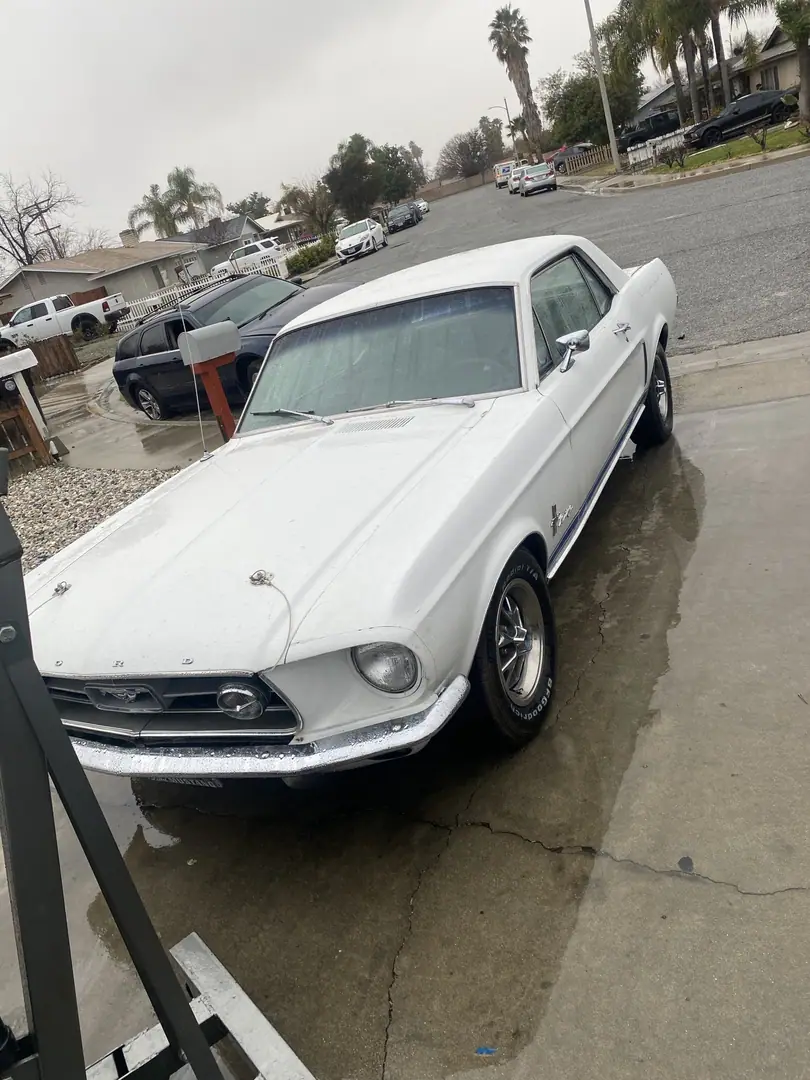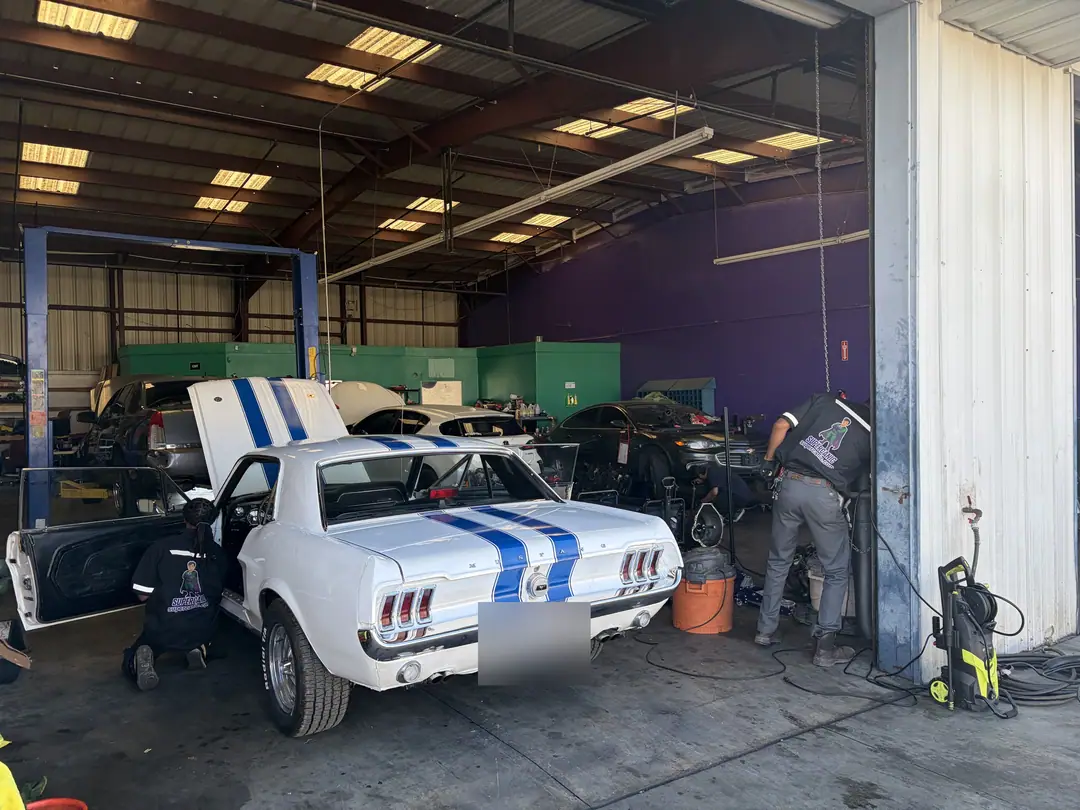
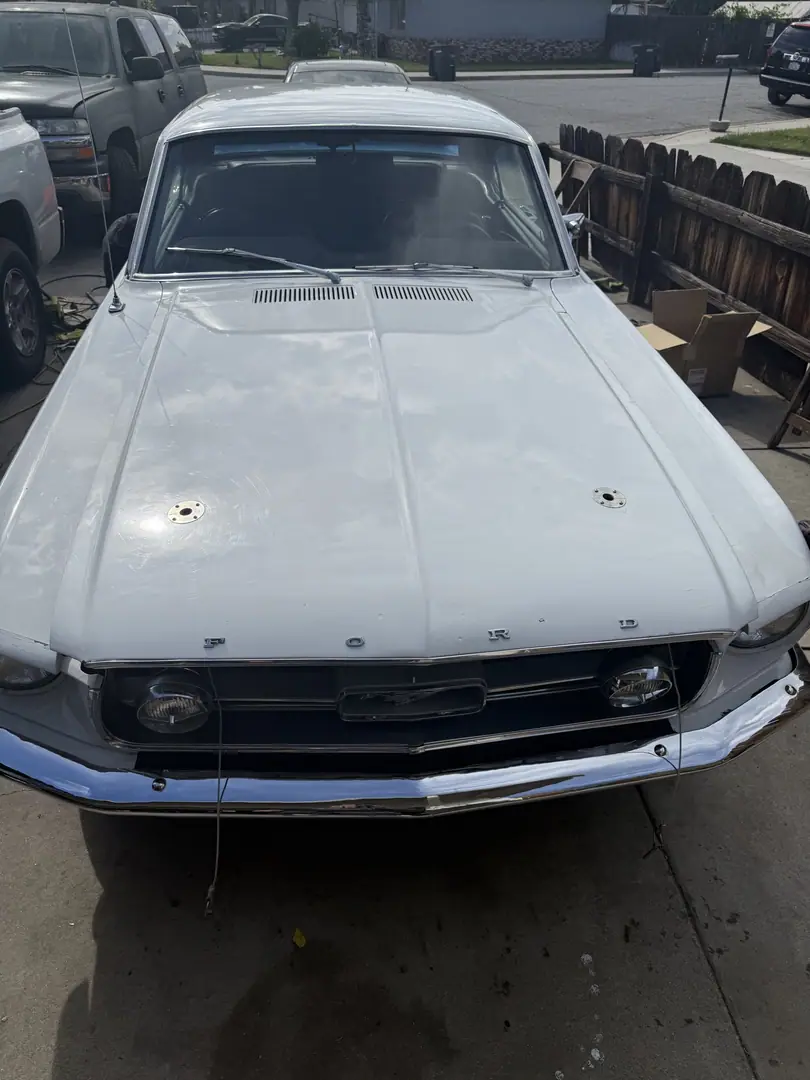
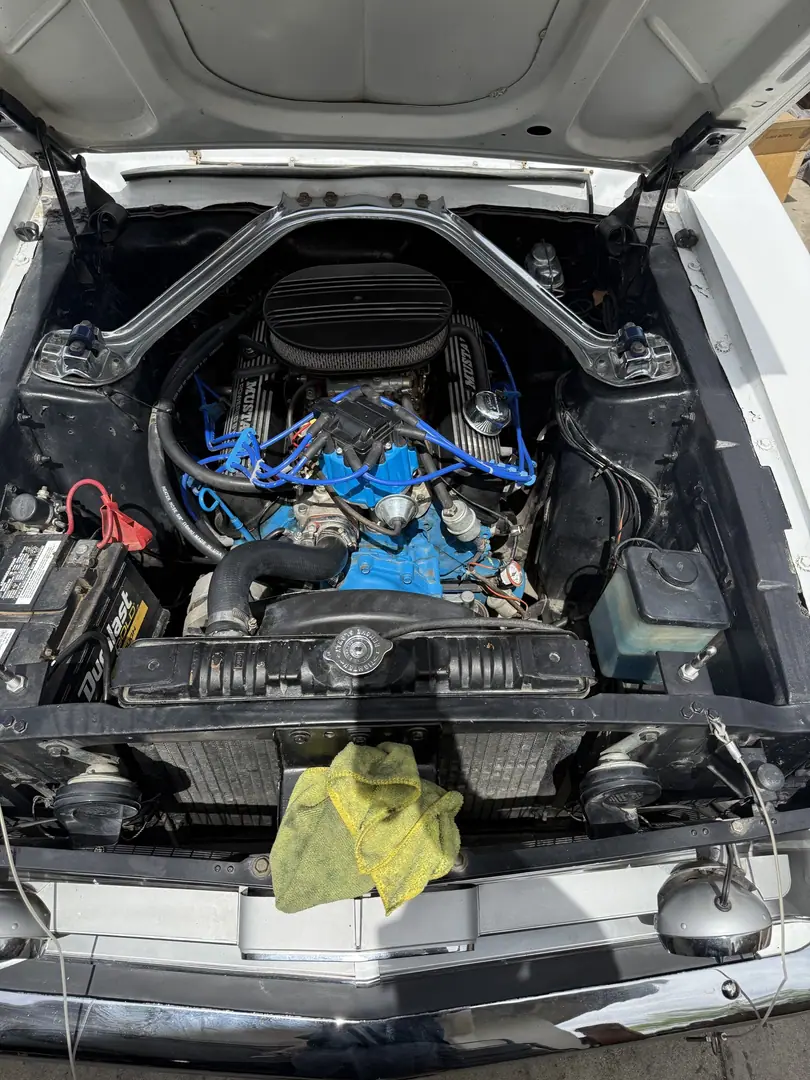
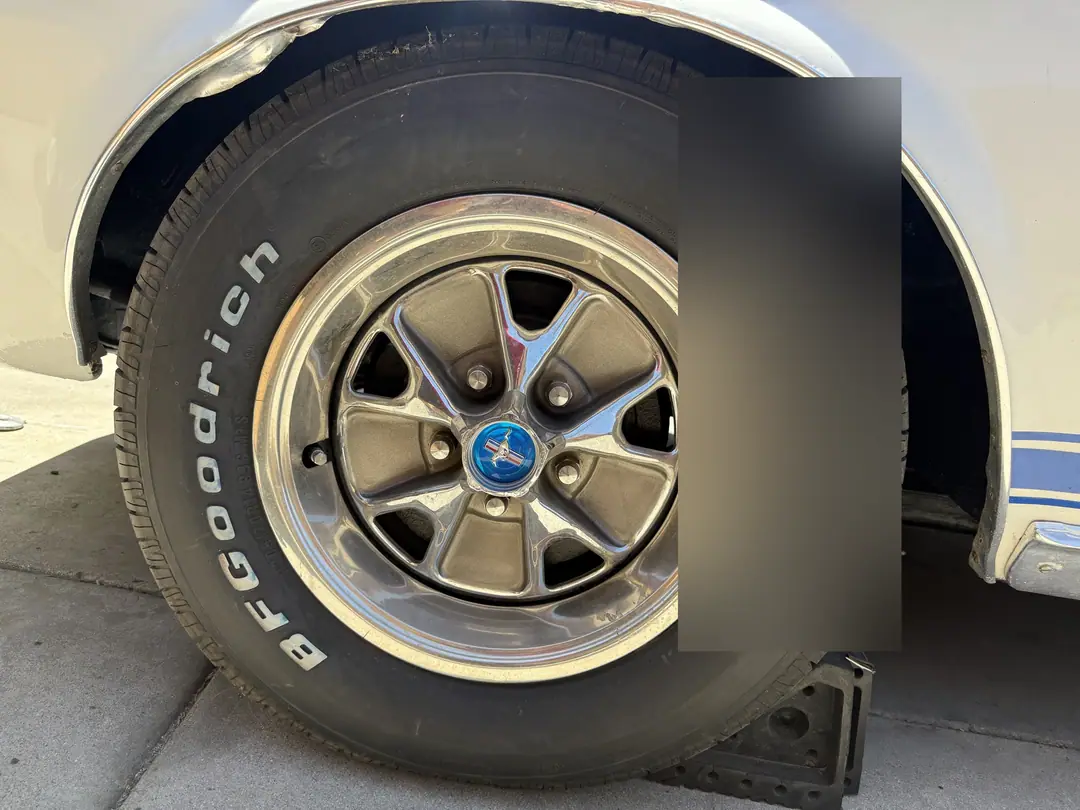
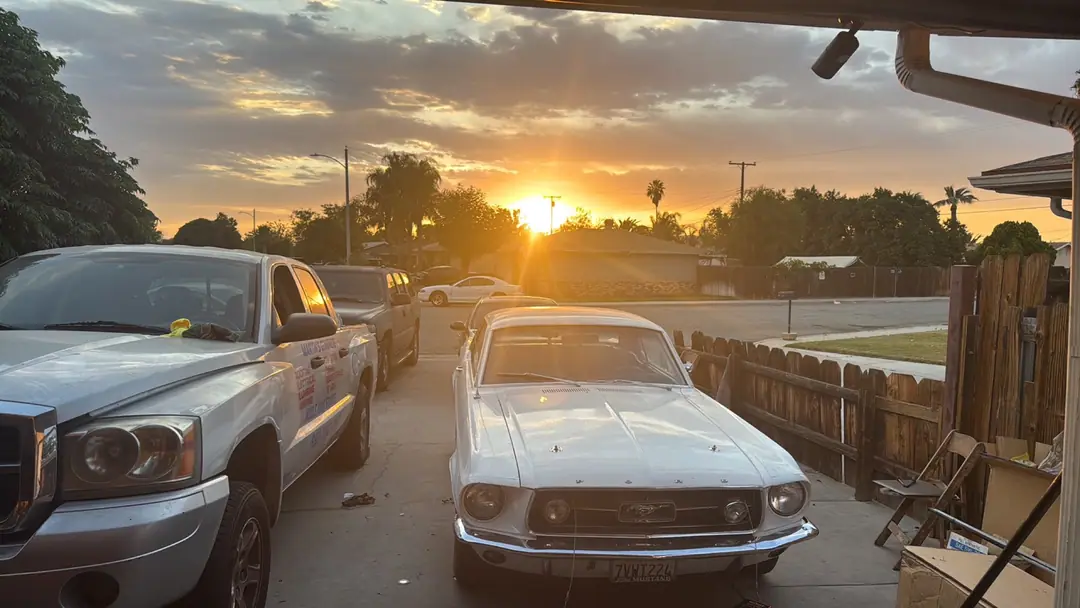
By May 2025 the white 1967 Mustang had been with us for three months. It lived in the driveway with the hood up a lot. Our photos from that month show the Ford V8 with blue valve covers and blue plug wires, and the car sitting on styled wheels with fresh BFGoodrich Radial T/A tires. The project page has the full build.
This is part two of the build. Part one covered the arrival. This month was about getting to know the car, and it is a good time to talk about the two things on a classic that get the least attention. Ignition parts and tires.
Quick answer: On a classic V8, plug wires, cap, rotor and plugs wear out quietly and cause rough running long before anything else does. And classic tires often age out by date while the tread still looks deep. Check both before you blame the engine.
What We Saw
Reading a Classic Engine Bay
A carbureted V8 is simple, but it is not foolproof. Fresh blue plug wires look good, and the routing still matters. Wires that touch the exhaust manifold burn through. Wires that run side by side for long stretches can fire each other and cause a miss.
We also look at what the photos cannot show. Vacuum leaks from old hoses. A choke that sticks. Fuel lines that have dried out. A carburetor that has been sitting with old fuel in it. Each of these can make a strong engine run badly.
Tires Have a Birthday
Every tire has a date code on the sidewall. It is a four digit number. The first two digits are the week and the last two are the year. On a car that does not get driven much, tires can look new and still be old.
- Look for small cracks in the sidewall and between the tread blocks.
- Check the date code, not just the tread depth.
- Check pressure cold, before driving.
- Look at the wheel too. Old steel wheels can rust at the bead and leak slowly.
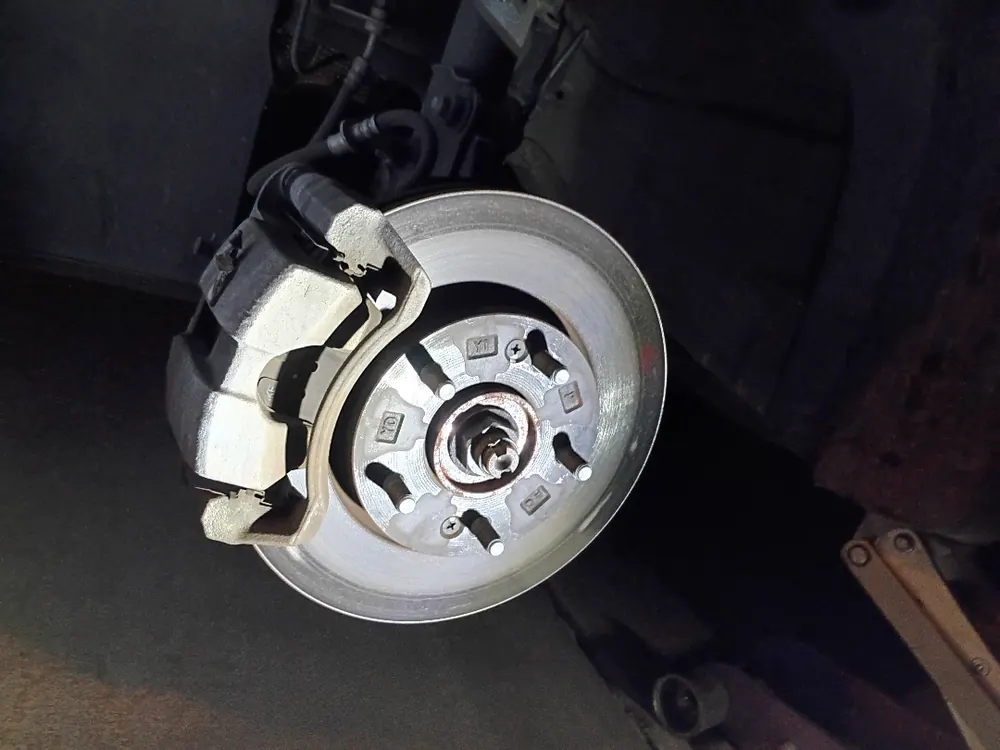
We photograph every wheel we work on. Our Our Story page even has a chapter for it, called Rubber.
Slow Months Are Part of a Build
Not every month of a long build looks busy. Some months are for sourcing parts, checking what works and planning what comes next. That is normal, and it is better than rushing. The engine on this car came out in October, and the build finished in February 2026. You can read that part in part three.
Simple Checks Before a Drive
Classic cars reward a short routine before each drive. It takes five minutes and it catches most problems before they leave you on the side of the road.
- Look under the car for fresh drips before you start it.
- Check the oil and coolant level.
- Look at the tires and the tire pressure.
- Let it warm up before driving hard.
- Listen for anything new, like a tick, a squeal or a knock.
Write down anything that changes. Notes like that help your mechanic a lot.
What It Means for Your Car
If your classic runs rough, start with ignition and vacuum checks before anything big. If it sits a lot, check the tire dates before a long drive. Those two checks catch a lot of problems for very little money.
We work on classics in our San Jacinto shop and in driveways. See our engine repair page for the kind of work we do.
Supercanic tip: On any car that sits, read the tire date before a road trip. Old tires can fail at highway speed with good tread. Call or text (951) 644-1599.
Classic Car Tune-Up or Tires?
We look at the whole car, not just the part you called about.