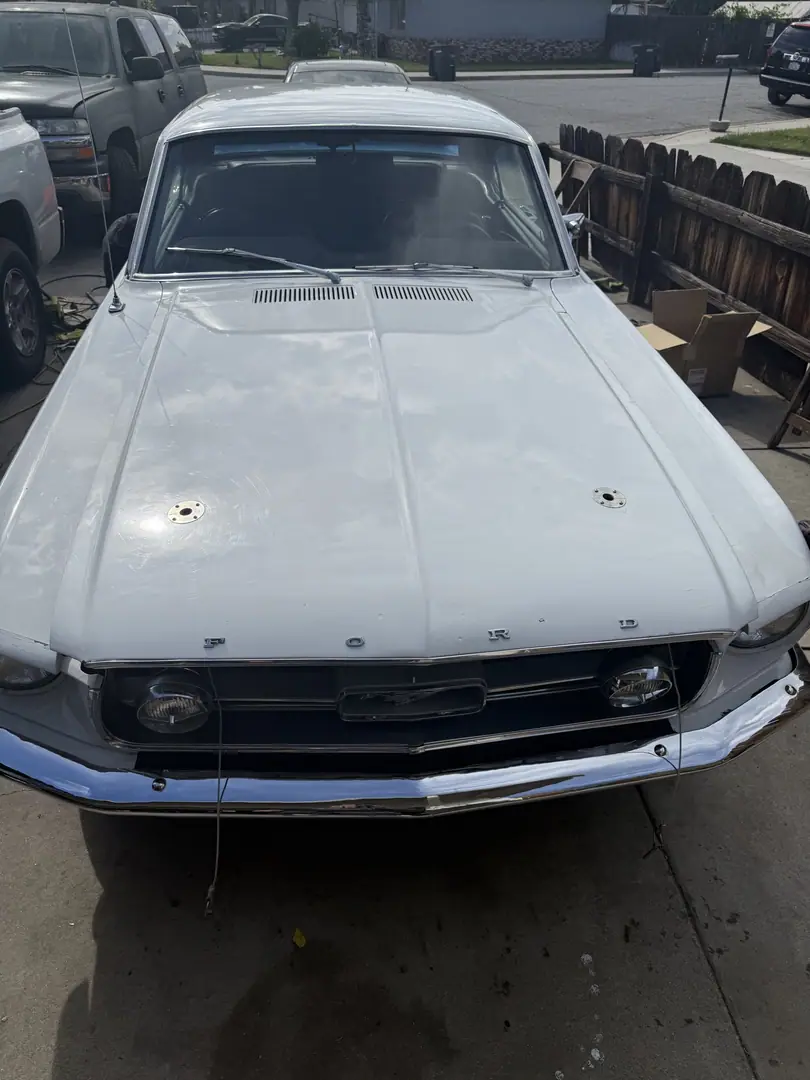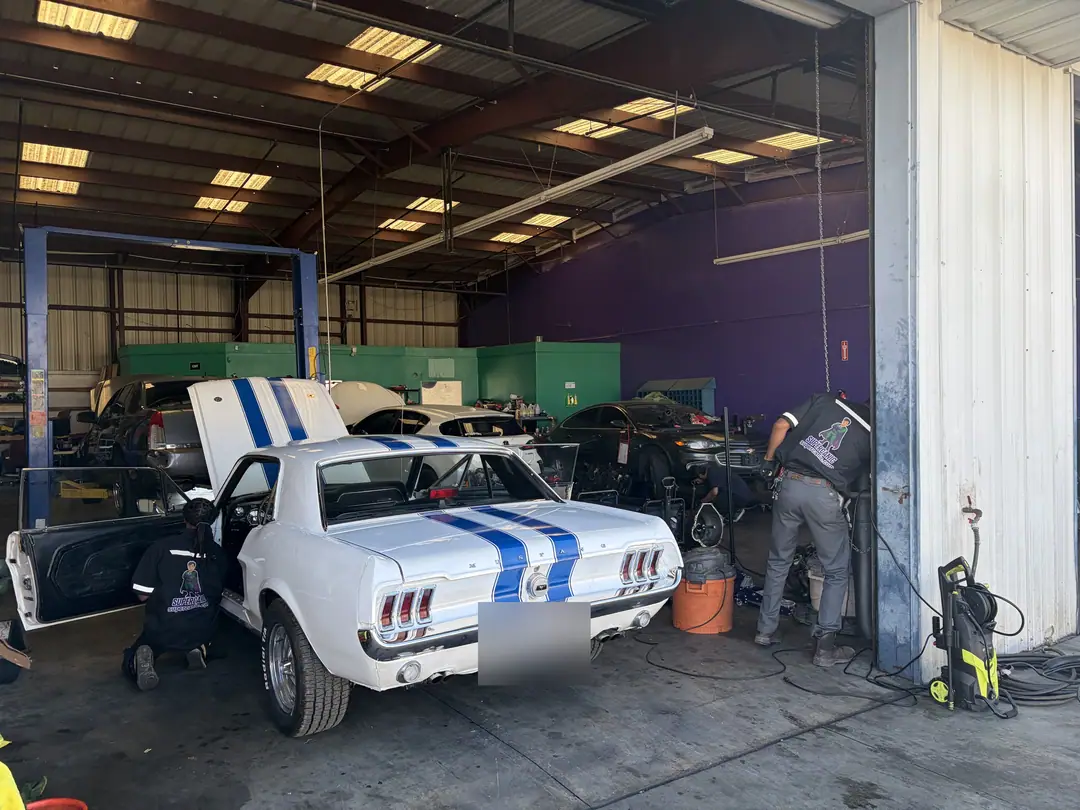
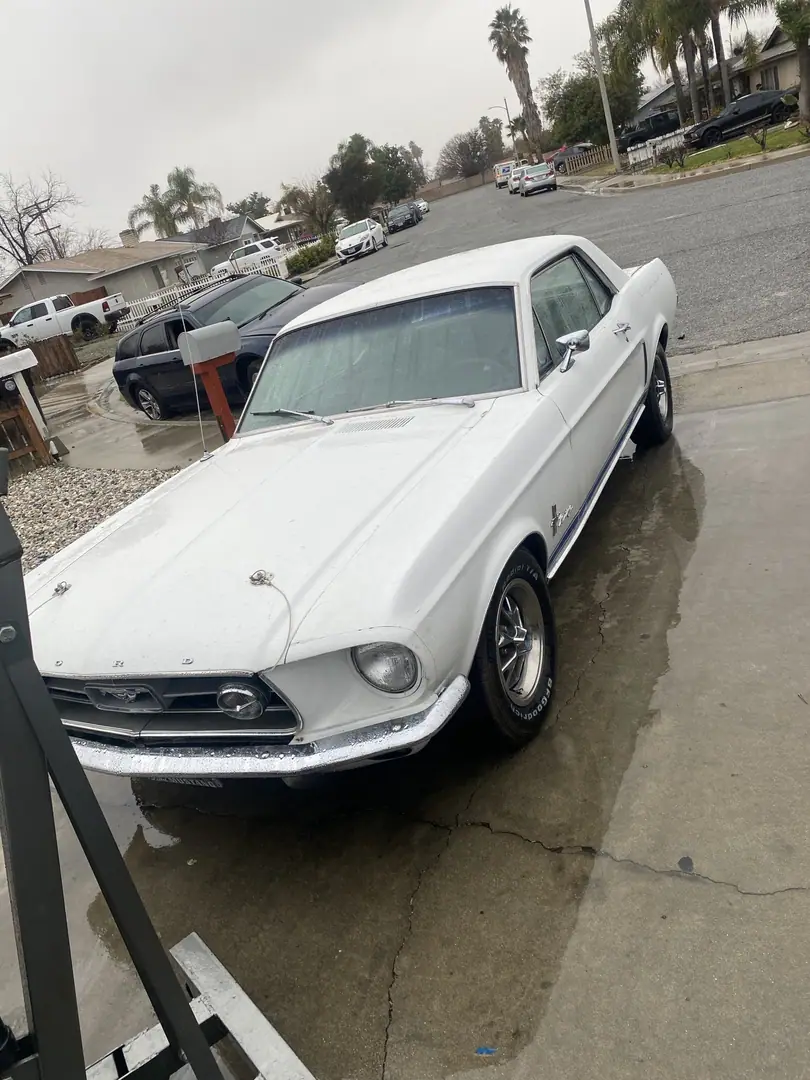
In February 2025 a white 1967 Mustang rolled into our driveway. It became one of the longest jobs we have ever done. It left a year later, in February 2026, with a rebuilt 289 and blue stripes. Every stage is on the 1967 Mustang project page.
This is part one, the arrival. The whole build has its own chapter on Our Story, and we will tell it in three posts. Here is how a classic build starts, and what we look at before anyone picks up a wrench.
Quick answer: A classic build starts with a slow look at everything. Body, frame, brakes, wiring and engine all get checked before a plan is written. The plan is what keeps a classic from turning into a project that never ends.
What We Saw
The First Walk Around
A classic does not have a computer to tell you what is wrong. So the first visit is eyes and hands. We walk the body panel by panel. We look at the chrome, the trim and the gaps. We check under the car for rust in the floors and the frame rails.
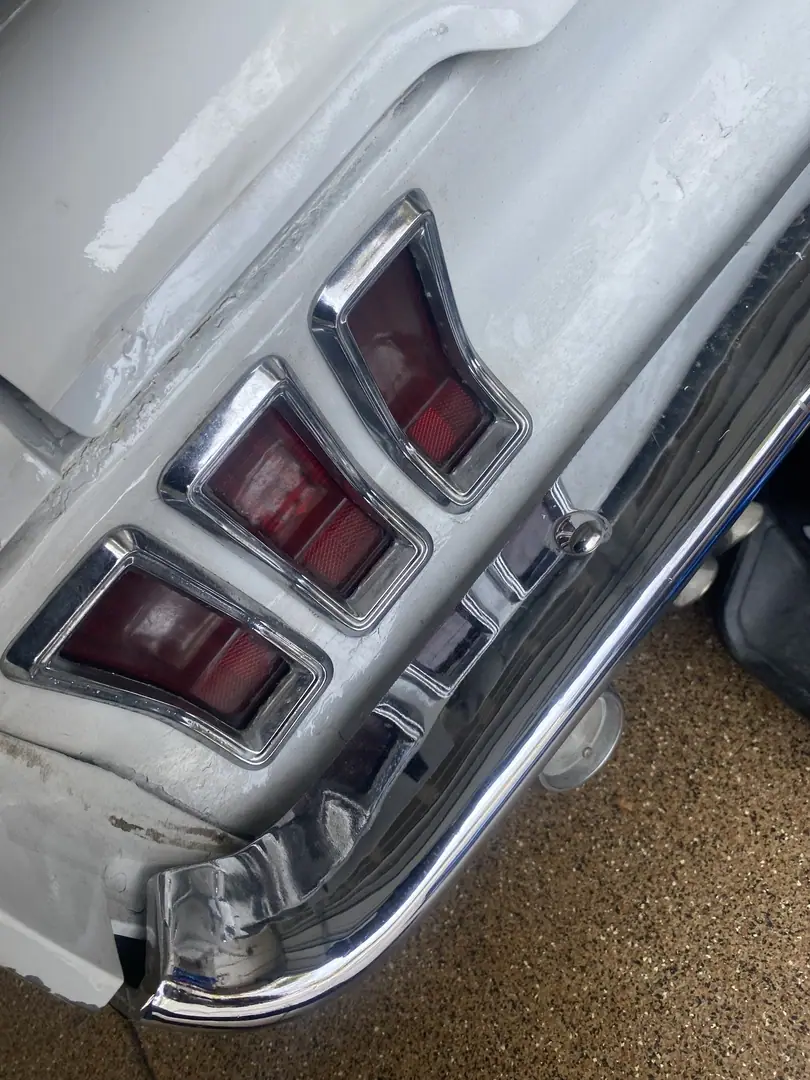
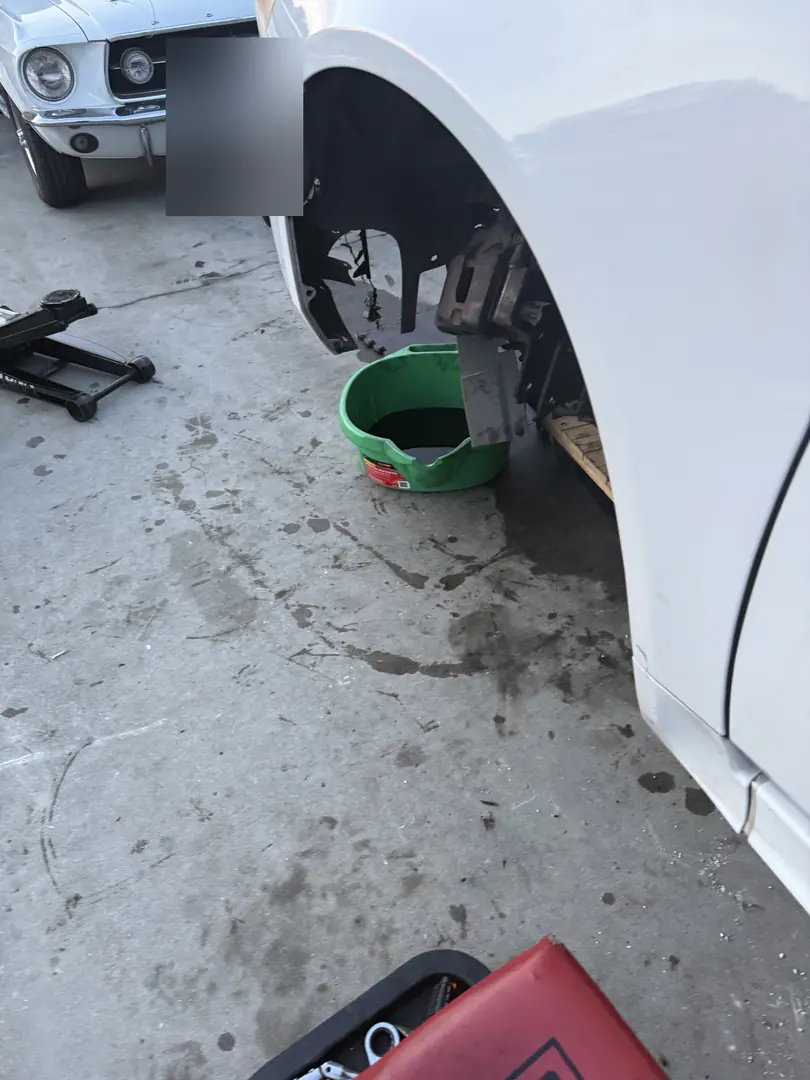
Our photos from that month are mostly close-ups. Taillights, the bumper, the front fender and the wheel wells. That is on purpose. Pictures taken on day one become the record of what the car looked like before we touched it.
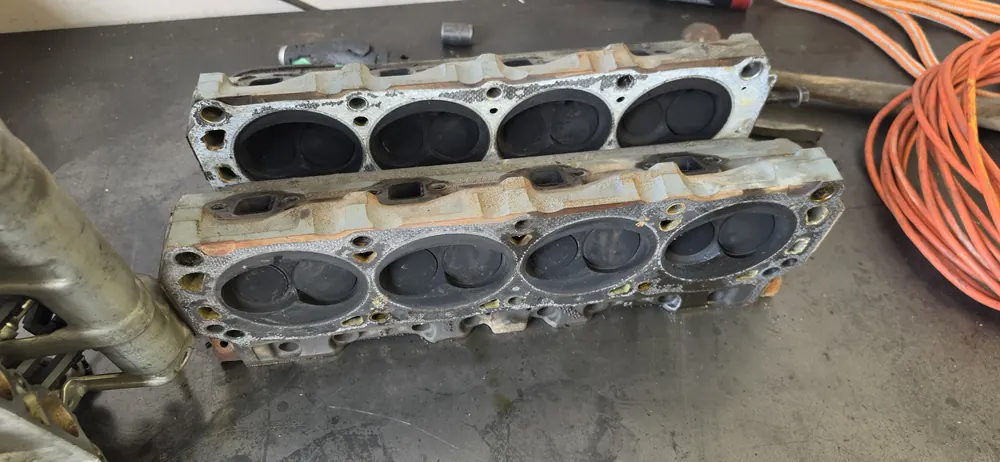
The Engine Under the Hood
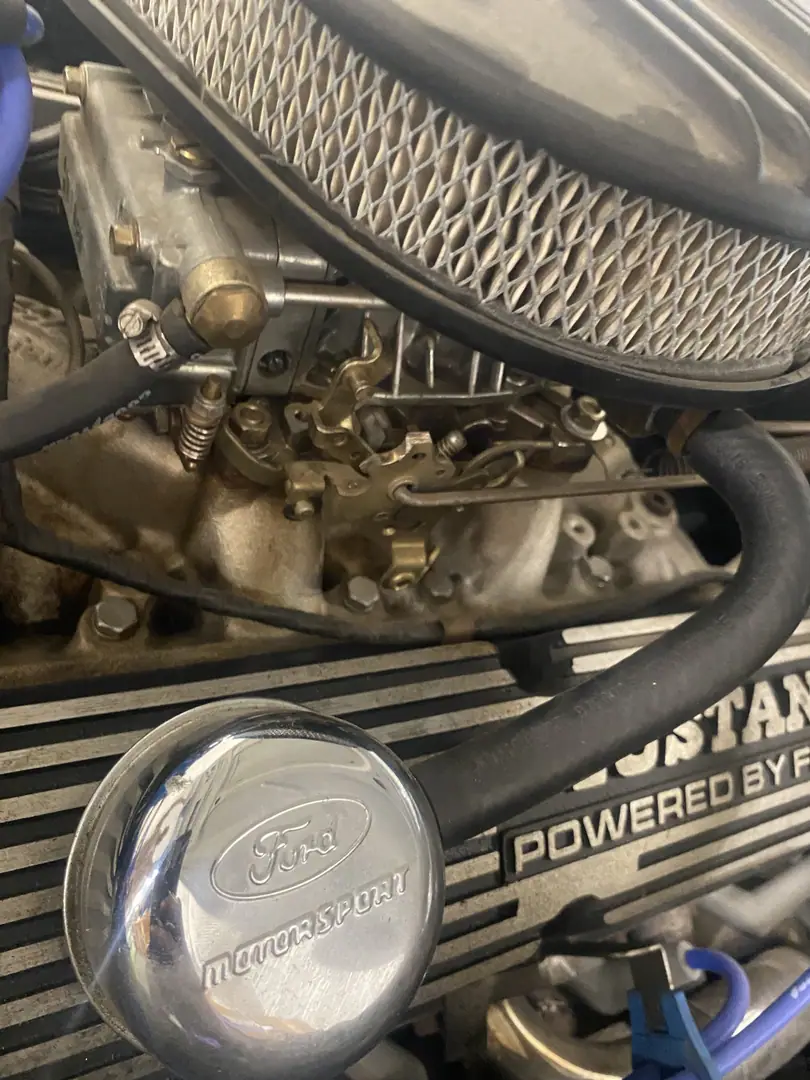
Under the hood was the 289, a small block Ford V8, with a chrome air cleaner and a Powered by Ford valve cover. On a car this age, we never assume the engine is the one it left the factory with. We check numbers, condition and leaks before we say anything about it.
We also look at the parts around it. Old fuel lines, cloth wiring and dried out hoses fail more often than the engine itself. A classic that will not start is usually a fuel or spark problem, not a broken motor.
Brakes and Suspension Come First
Before any power goes up, the car has to stop and steer. The wheels came off early, as you can see in the photos. Old brake hoses crack from the inside, and old drums can be worn past safe limits even when they look fine.
- Brake hoses, lines and wheel cylinders.
- Ball joints, tie rod ends and bushings.
- Wheel bearings, which need grease and adjustment on cars this old.
- Tires, which age out by date even with deep tread.
Writing the Plan
The plan is a list in order. Safety first, then reliability, then looks. Each step has its own price, so the owner can choose how far to go and when. A classic that gets done in stages is still a car you can drive between them.
This one went in stages over a full year, moving from our driveway into our new bays when the shop opened. Part two covers the summer of 2025. You can also read about how we do engine work today at our San Jacinto shop.
Questions Owners Ask About Classic Builds
Do I have to do everything at once? No. Most owners do it in stages, and that is how we like to plan it.
Can I drive it between stages? Once the brakes, steering and tires are safe, often yes. We will tell you when it is ready.
Will you use original parts? Where it matters to you and parts exist, yes. Where safety is involved, like brake hoses, new parts win.
What It Means for Your Car
If you have a classic, start with a full look over and a written list. Ask the shop to photograph what they find. It protects you and it helps you plan your money over time instead of all at once.
Supercanic tip: Replace rubber brake hoses on any classic that has been sitting, even if they look good outside. They fail from the inside. Call or text (951) 644-1599.
Have a Classic That Needs Work?
Bring it to the shop. We will look it over and give you a plan in writing.