Quick answer. A blown engine usually shows one or more of these signs. A deep knock that gets faster as you rev, a loud bang followed by the engine dying, heavy smoke from the tailpipe, milky oil, metal flakes on the dipstick, or an engine that will not turn over at all. Some of those signs have cheaper causes, so do not condemn the engine on a guess. A compression or leak down test proves whether the damage is inside the engine.
Key Points
- Blown is not one failure. It can mean a broken rod, a spun bearing, a cracked head or block, or a seized engine.
- A blown head gasket is not a blown engine. It is a big repair, but the engine can often be saved.
- Stop driving the moment you hear a hard knock or see the temperature spike. More miles can turn a repair into a replacement.
- Testing comes before any quote for a new engine. A good shop shows you the test result.
What People Mean by a Blown Engine
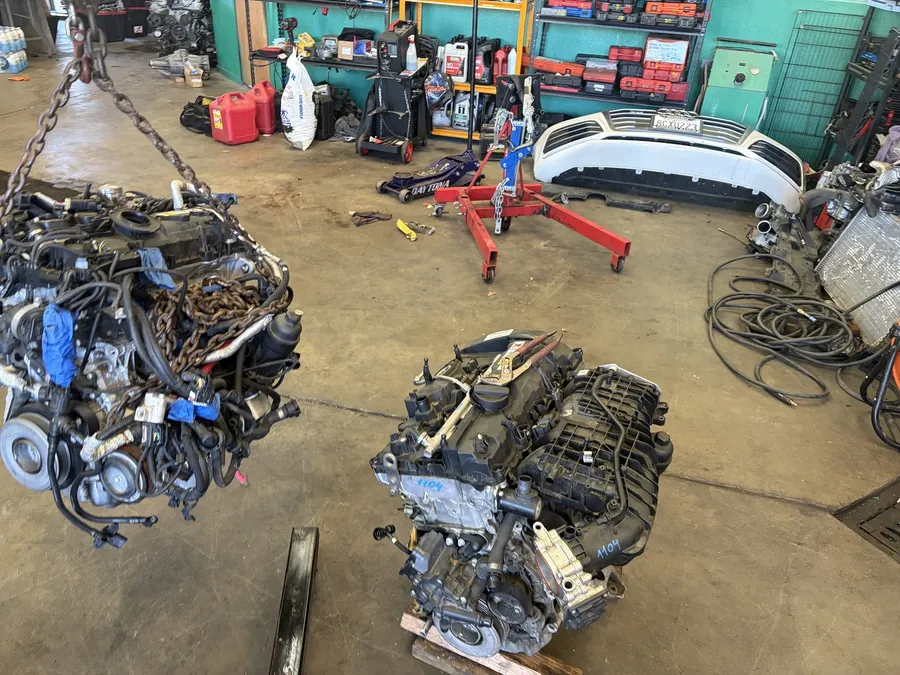
Blown is a catchall word. Mechanics use it for any damage inside the engine that is too big to fix with a part bolted on the outside. The common ones are a rod bearing that spun and started knocking, a connecting rod that broke and punched a hole in the block, a cracked cylinder head or block, and an engine that seized because it ran out of oil or overheated.
Some of those can be rebuilt. Some mean the engine has to come out. The word blown does not tell you which, and that is why the next step is always a test, not a price.
The Signs and What They Can Mean
| What You Notice | What It Can Mean | What Else It Could Be |
|---|---|---|
| Deep knock that speeds up with the engine | Worn or spun rod bearing | Loose heat shield, exhaust leak, noisy lifter |
| Loud bang, then the engine quits | Broken rod or failed internal part | Snapped timing belt, which can still damage valves |
| Thick blue gray smoke | Burning oil from worn rings or valve seals | Leaking turbo seal, oil on the exhaust |
| Thick white smoke that smells sweet | Coolant burning in the cylinders | Head gasket, which is often fixable |
| Milky, tan oil on the dipstick | Coolant mixing with oil | Head gasket or a failed oil cooler |
| Metal flakes or glitter in the oil | Bearings wearing away | Rarely anything harmless |
| Starter clicks or clunks, engine will not turn | Seized engine | Dead battery, bad starter, or water in a cylinder |
One sign on its own is a clue. Two or three together, like a knock plus metal in the oil, point much harder at real internal damage. If your engine ran hot right before any of this started, read our post on why cars overheat in valley heat, because heat is one of the most common ways an engine gets hurt.
What to Do Right Now
- Stop driving it. A bearing that is knocking can let go completely, and a rod through the block ends any chance of a rebuild.
- Do not keep trying to start it. If it banged and died, or will not turn, more cranking can do more damage.
- Check the oil level once the engine is off and has sat a few minutes. Very low oil is a big clue, and so is a milky color.
- Never open the radiator cap on a hot engine. Wait until it is cool to the touch.
- Write down what happened and when. Was there a noise, a smell, smoke, a warning light? It helps the diagnosis more than you think.
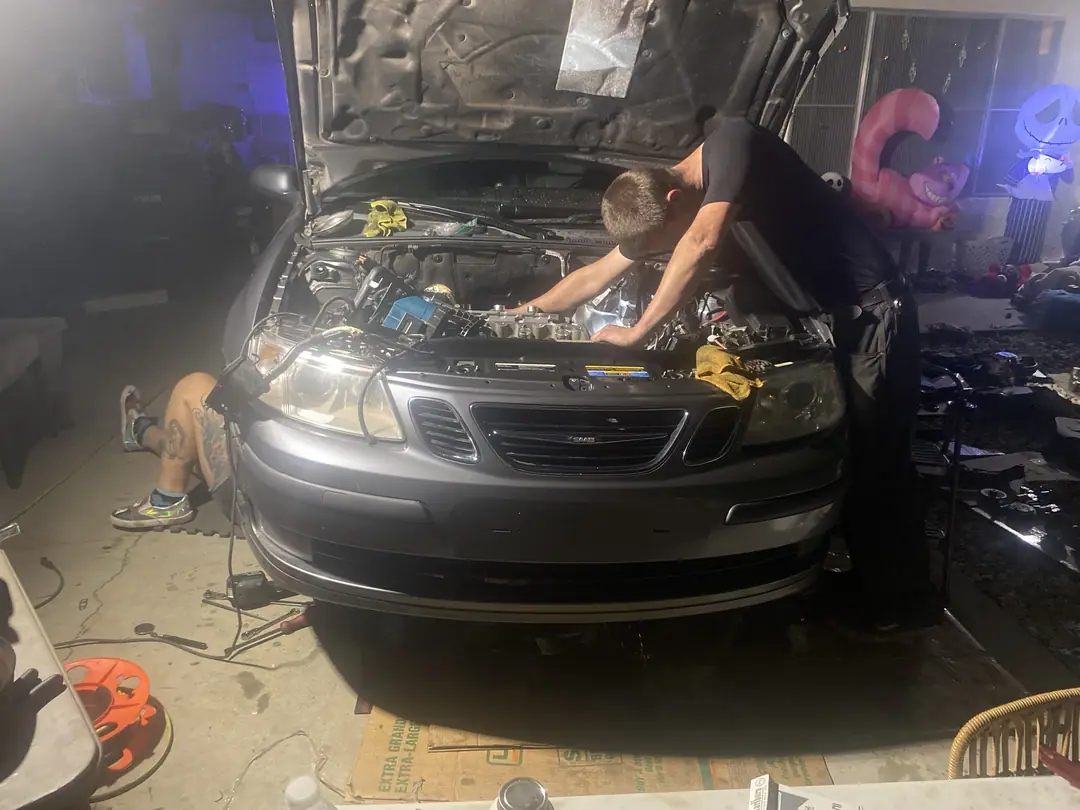
You do not need to tow it to a shop to find out. We are mobile, so we come to where the car stopped, anywhere in Riverside County.
How We Prove It Before You Pay
Nobody should sell you an engine based on a noise alone. Here is how we confirm what failed.
- Full scan. Stored codes and live data show misfires, overheating history and sensor readings.
- Compression test. A gauge in each spark plug hole shows whether every cylinder holds pressure. One low cylinder points to rings, valves or a gasket.
- Leak down test. We push air into a cylinder and listen for where it escapes. Air at the tailpipe, the intake, the oil cap or the radiator each points to a different part.
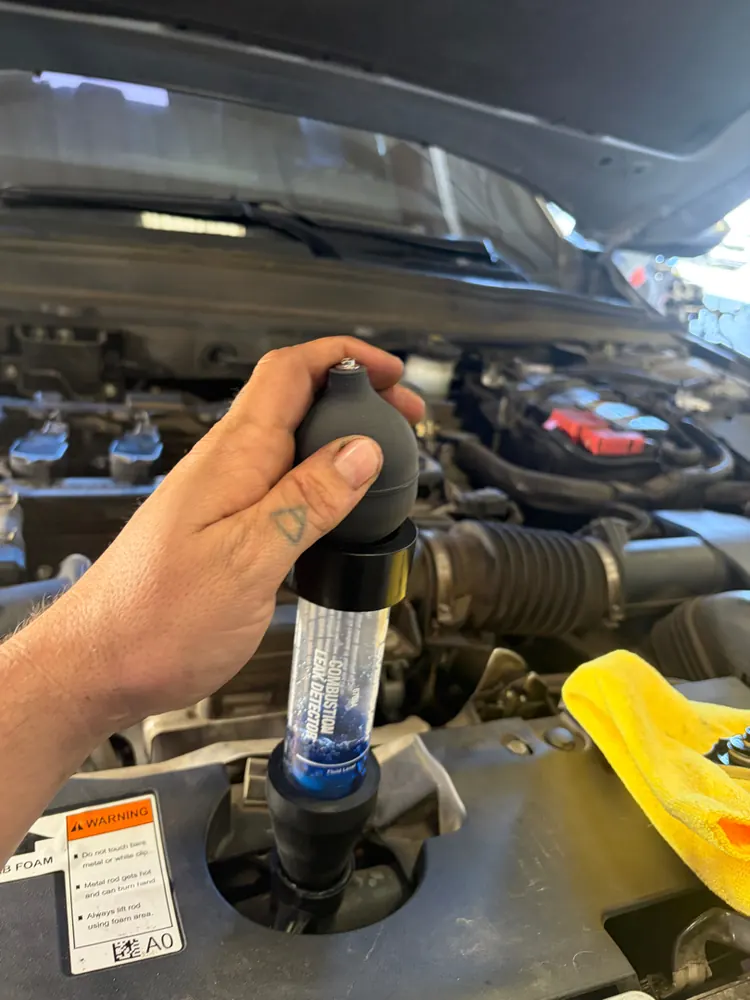
- Block test. A fluid that changes color picks up exhaust gas in the coolant, which points to a head gasket or a crack.
- Oil check. We look at the oil and what is in it, and sometimes drop the pan to look at the bearings.
Our advanced diagnostic covers compression, leak down, smoke and pressure testing, and it costs $225. You get the finding and the repair price before any work starts. See our diagnostic service for what is included.
Fix It, Replace It or Move On
Once the test tells us what failed, there are usually four roads. A head gasket or a top end repair if the bottom of the engine is healthy. A rebuild of the engine you have. A good used or remanufactured engine dropped in. Or selling the car as is and putting the money toward another one.
Which one makes sense depends on the car's value, its other problems and what you need it for. Our post on what engine replacement costs lays out the three ways to replace an engine with real numbers. Is my car worth fixing walks through the repair or replace math. Engines are a big part of our work. We did 684 engine swaps, rebuilds and head gasket jobs in the last 12 months, so we have seen most of the ways an engine fails.
Supercanic tip. If your car made a bad noise and you are not sure how bad, park it and call before you drive it again. A five minute call can save an engine. Call (951) 644-1599.
Frequently Asked Questions
Can a blown engine be fixed?
Often, yes. A spun bearing or a head gasket can usually be repaired or rebuilt. A rod through the block or a badly cracked block usually means a replacement engine. A test tells you which one you have.
What does a blown engine sound like?
The classic sound is a deep, heavy knock from low in the engine that gets faster as you rev. That is usually a rod bearing. A light ticking from the top of the engine is more often a lifter or an exhaust leak, which costs far less.
Can I drive with a blown engine?
No. If the engine is knocking hard, smoking heavily or overheating, every mile can add damage, and a rod can break without warning. Park it and have it checked where it sits.
Is a blown head gasket the same as a blown engine?
No. A blown head gasket lets coolant, oil or exhaust leak where they should not. It is a big repair, but the engine can often be saved if you stop driving it early. Our head gasket post covers the signs.
Is it worth fixing a blown engine?
It depends on the car. A newer car with a good body and few other problems is often worth a used or rebuilt engine. An older car with other big repairs coming may not be. Get the test result and a written price, then compare it with what the car is worth.
Think Your Engine Is Done? Let Us Test It First
We come to the car, run the tests, and tell you what failed and what it costs before any work starts.