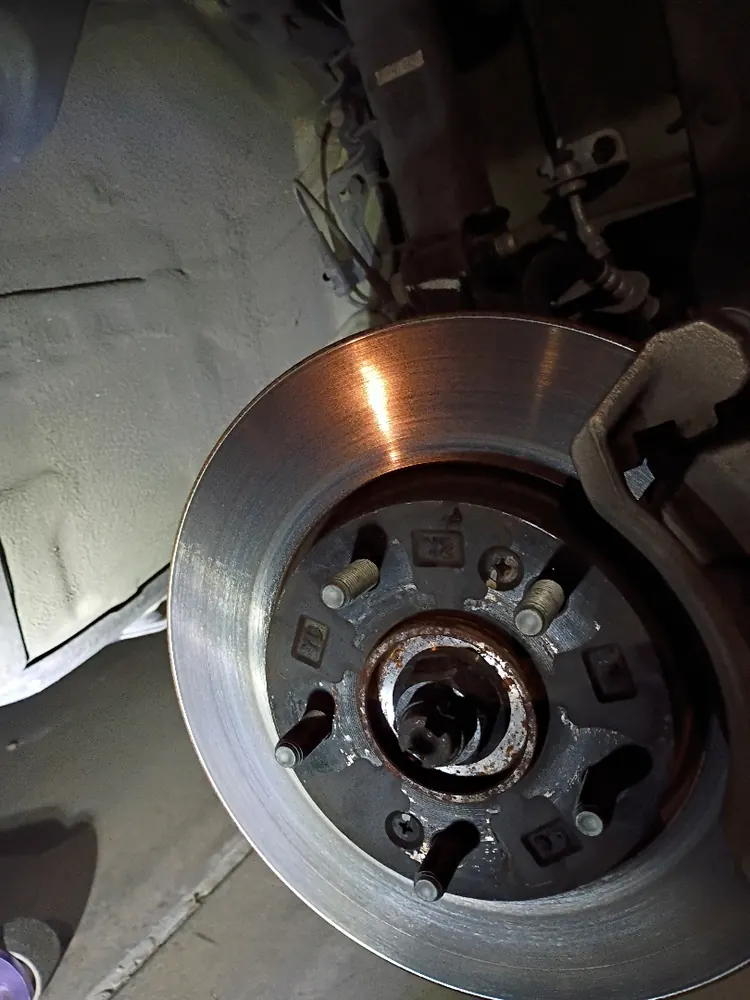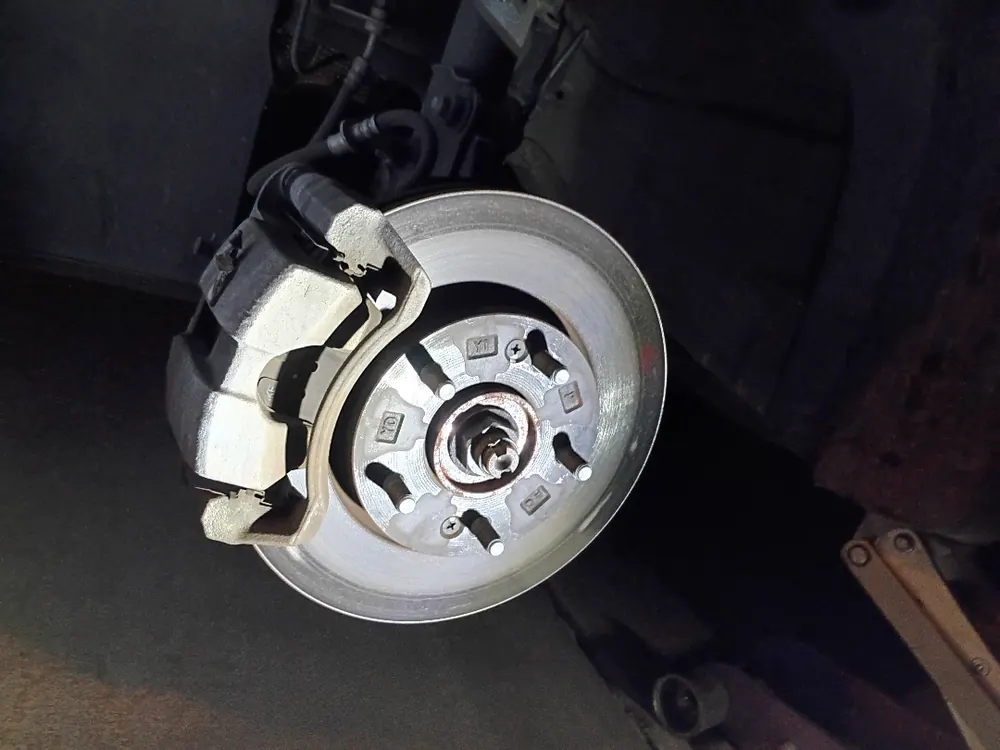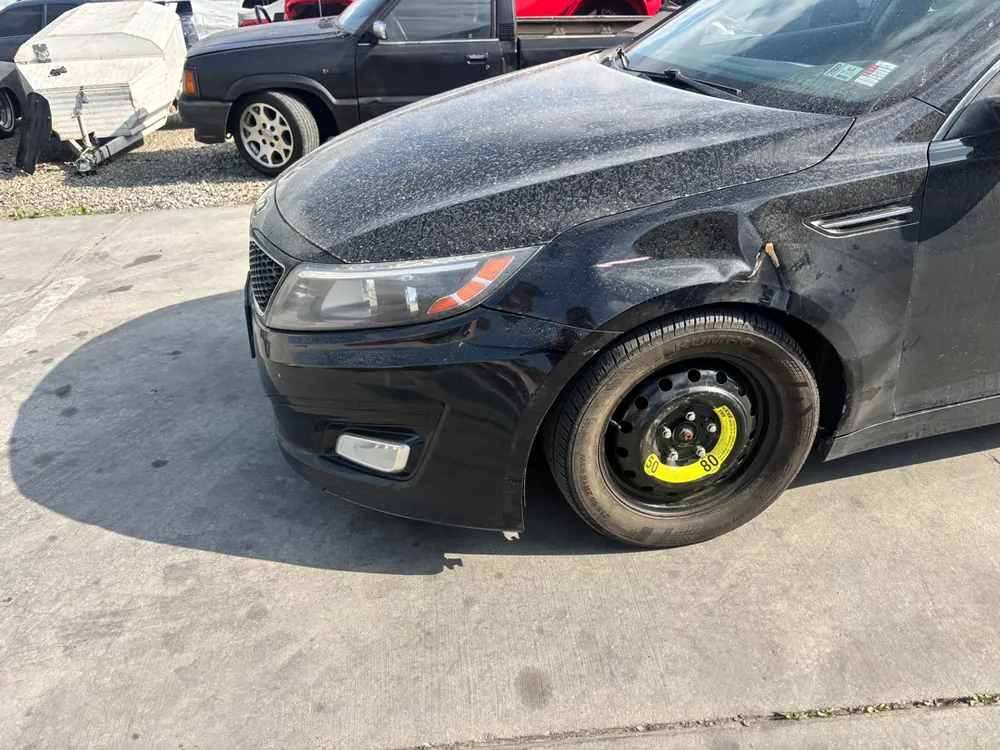
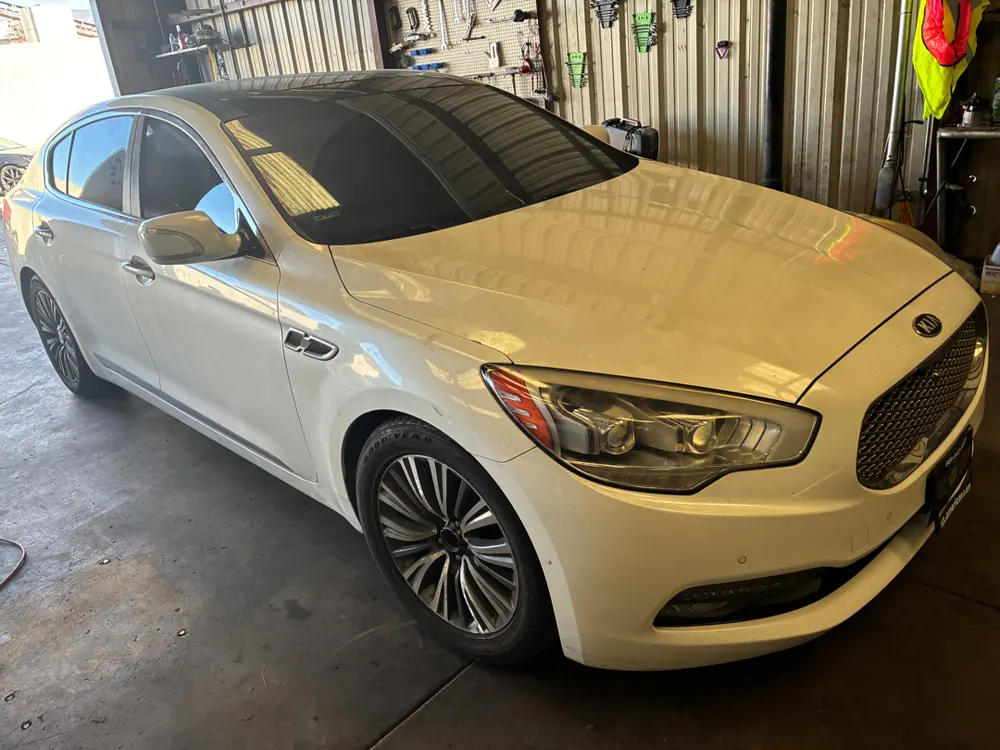
In December 2025 a 2016 Kia K900 came to us from Corona. The job was front wheel stud replacement. The owner supplied the parts, and we did the install in the shop.
A wheel stud is a small part with a big job. It is one of the bolts that holds your wheel to the car. Here is why studs fail, why we never skip one, and what it means if you see a damaged one on your car.
Quick answer: Wheel studs fail from cross threading, over tightening with an impact gun, or rust. A damaged stud cannot hold its share of the load, which puts more on the others. Replace it before the wheel goes back on the road.
What We Saw
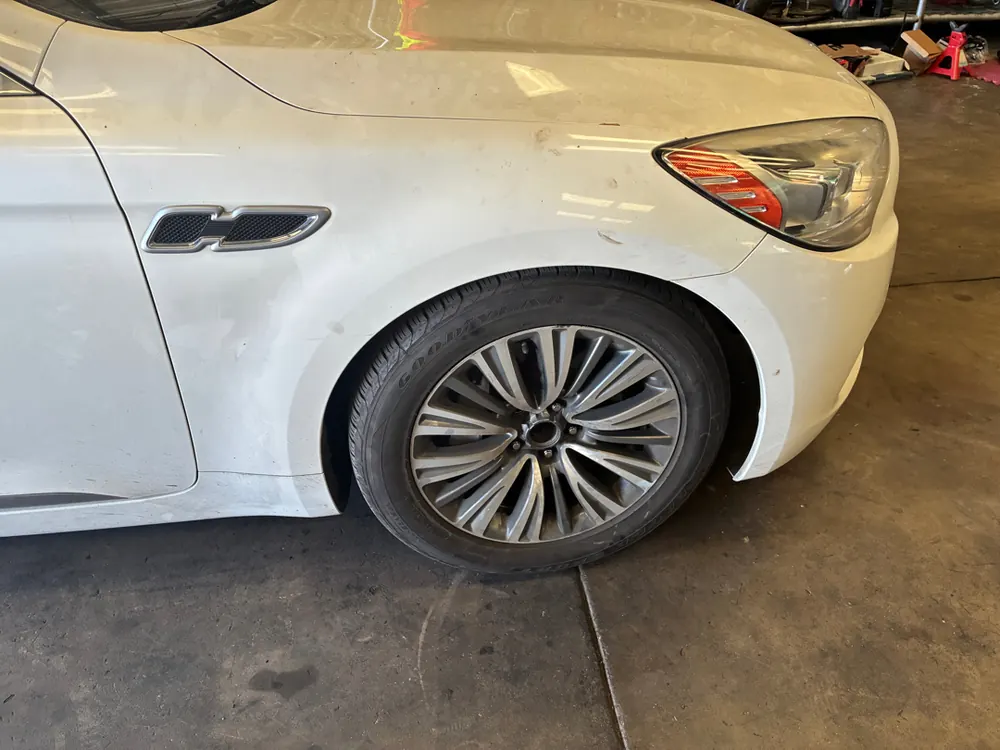
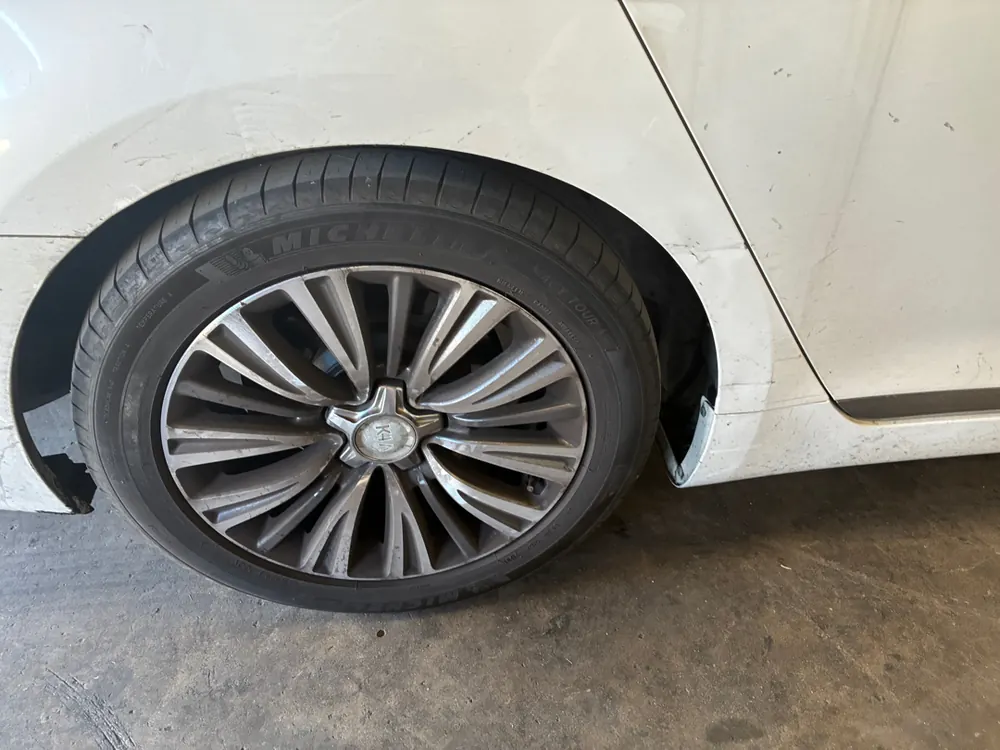
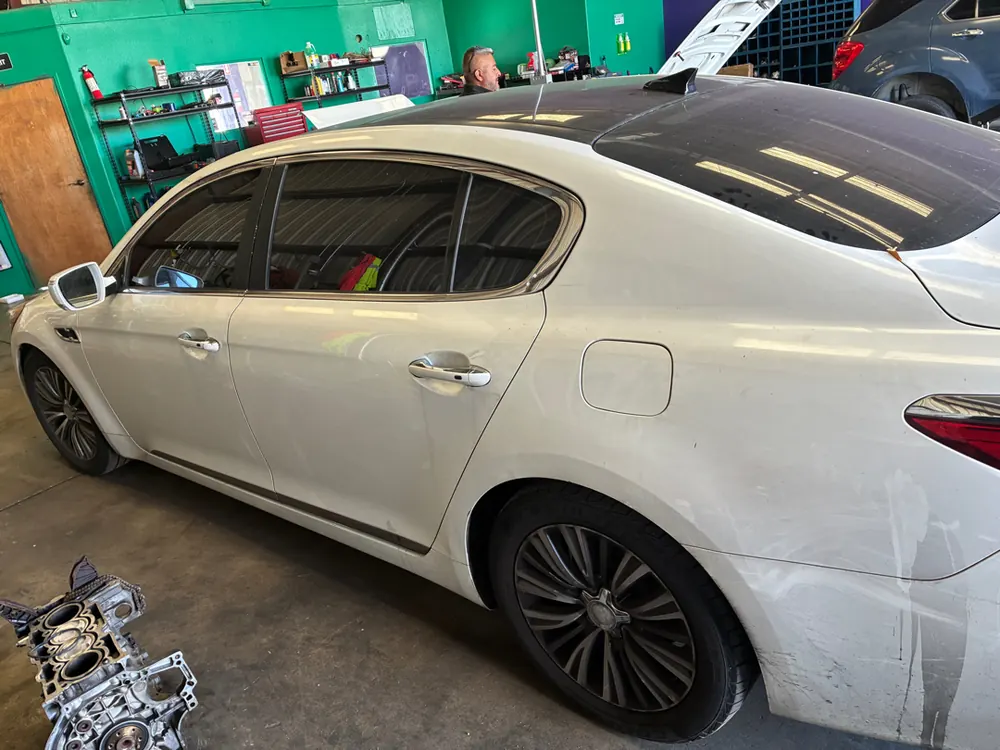
How Wheel Studs Get Damaged
Most damaged studs are made, not worn. A lug nut started at an angle and run on with an impact gun will cut its own threads. A lug nut tightened far past spec can stretch the stud. Once stretched, it is weaker even if it looks fine.
- Stripped or crushed threads, so the nut will not seat.
- A stud that spins in the hub.
- A stud that is bent, stretched or snapped off.
- A lug nut that is stuck, swollen or rounded off.
How We Replace Them
On most cars the stud is pressed into the hub flange from behind. To replace it, the wheel comes off, and often the brake caliper and rotor come off too so there is room to get the old stud out and the new one in. The new stud is pulled in until it is fully seated against the flange.
With the brakes apart, we take a look at the pads, rotors and hardware. We tell you what we see. We do not add brake work you did not ask for. You can read more on our brake service page.
Torque Matters
When the wheel goes back on, the lug nuts are started by hand, then snugged in a star pattern, then torqued to the spec for that car with a torque wrench. Not just an impact gun. Correct torque is what keeps the wheel tight and the studs healthy for years.
After a wheel is installed, it is smart to check the torque again after the first short drive. Wheels can settle a little against the hub.
Questions Owners Ask About Wheel Studs
Can I drive with one stud missing? We do not recommend it. The other studs carry more load, and they can loosen or break too. Get it fixed before driving any distance.
Do I need to replace all of them? Not always. Replace the damaged ones, and check the rest for stretched or damaged threads. If several are bad, doing the whole hub can make sense.
Can I bring my own parts? Yes. On this job the owner supplied the parts. We check that they match before we start.
What It Means for Your Car
If a lug nut will not tighten, spins, or a stud is broken, do not drive on it. If you see a shop using only an impact gun to put your wheels on, ask them to torque them by hand at the end. It is your right to ask.
We serve Corona from our shop and on the road. See the Corona page for what we do there.
Supercanic tip: Keep the wheel lock key in the glove box, not at home. A missing key turns a tire change into a tow. Call or text (951) 644-1599.
Lug Nut or Wheel Stud Trouble?
Do not drive on it. Call and we will come to you or get it to the shop.