Mobile Mechanic in Portland
Portland is our newest service area. Bring us a check-engine light before your DEQ test or a transmission issue, and we'll fix it where the car is parked.
Driveway, Curb or Job Site
Every job in Portland is mobile. We come to your driveway, the street out front, your apartment lot or the job site.
Engine Repairs
Won't start or won't crank. Call us and we'll come find out why.
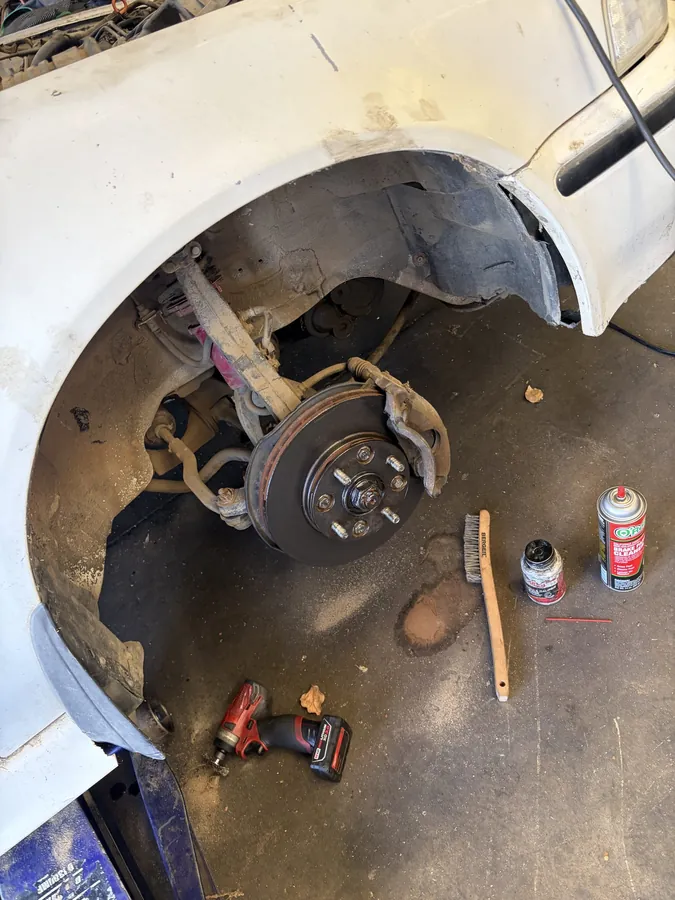
Brake Service
Ask about our discounted brake packages on parts and labor.
Diagnostics
Code scans, live data and bidirectional testing, starting at $150.
Oil Change
We change the oil wherever the car is parked, at a time that works for you.
Rain, Hills and Road Salt Season
Portland is wet. The rainy stretch runs from about October into May, and cars stay damp for months. Damp wears a car differently than heat and sand do. It's just as hard on it, and the damage shows up in the same places every time.
We see four problems on Portland cars over and over.
Corroded electrical grounds and connectors. Moisture works its way into connector housings and ground straps. The symptoms come and go, which makes them maddening. Lights flicker. The car won't start, then starts fine an hour later. Sensors set codes that clear on their own. Chasing an intermittent electrical fault is one of the most common diagnostic jobs we get here.
Brakes that rust between drives. A car that sits outside for a few wet days grows a film of surface rust on the rotors. Most of it scrubs off on the first stop. Cars that sit for weeks are another story. Second cars, work trucks and anything stored on the street can end up with pitted rotors and sticking caliper slides long before the pads wear out.
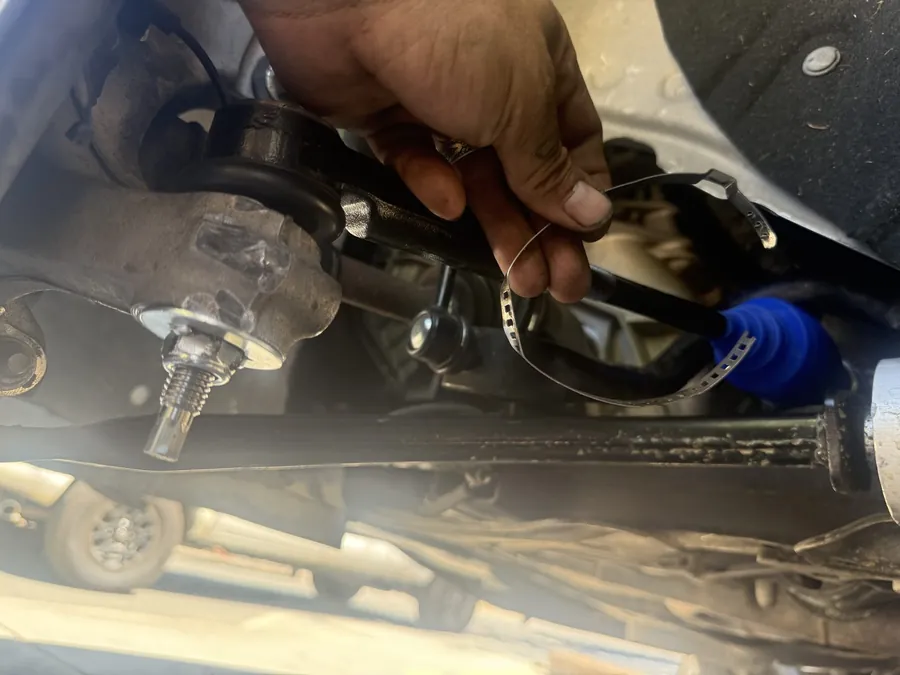
Suspension beaten up by winter roads. Studded tires are legal in Oregon from November 1 through March 31, and years of them have left ruts and rough patches on a lot of Portland pavement. Those ruts are hard on struts, control arm bushings, and wheel bearings, and they will pull your alignment out well before the mileage says it should be.
Brake wear from the hills. If your commute runs over the West Hills, up through Sylvan on US-26, or down any of the grades into downtown, your brakes work harder than the mileage suggests. Add stop-and-go on I-5, I-84 and I-205 and pads go quicker than the maintenance schedule predicts.
DEQ Testing and the Check-Engine Light
This is the one that catches Portland drivers out. Oregon DEQ emissions testing is required in the Portland metro area to renew your registration, and an illuminated check-engine light is an automatic fail. The technician doesn't even need to look at why. It doesn't matter how minor the fault is.
Clearing the code and driving straight to a Clean Air Station won't work either. Clearing codes resets your vehicle's readiness monitors, and DEQ will reject a car whose monitors have not completed. The car needs a proper drive cycle after the repair before it will pass.
If your registration is coming up and the light is on, get the fault diagnosed and actually repaired with enough time to drive it in afterward. We can scan the codes, fix the cause, and tell you whether your readiness monitors are set before you waste a trip to the testing station.
How the Mobile Service Works
Call (971) 525-2111 or use our contact page. Tell us what the vehicle is doing. We give you a price up front. Then we come to you with the tools and parts on board and do the work where the car sits, whether that's a driveway, the street, an apartment lot or a job site. You pay when the job is finished.
Some jobs really do need a lift. Full transmission rebuilds, heavy engine work and anything structural fall in that group. Portland is a mobile-only area for us, so we'll tell you plainly and help you figure out where the car should go.
Services We Handle in Portland
We cover engine repair, brake service, transmission work, cooling system service, suspension, electrical, timing belts, oil changes, and roadside assistance, on cars, trucks, SUVs and vans of pretty much every make.
Portland Neighborhood by Neighborhood
Portland is not one flat grid. A car in Lents lives a different life than a car in the Southwest Hills, and the repairs follow. Below is how the city breaks down, where the DEQ test fits in, and what each area does to brakes, suspension and electrical systems.
Portland is split into six addressing sectors, North, Northeast, Northwest, South, Southeast and Southwest, according to Wikipedia's Portland article. The city had 652,503 people at the 2020 census. We use the sector and neighborhood names below the way a resident would when giving us an address.
Portland ZIP Codes at a Glance
Portland has 33 standard ZIP codes, listed by GIS Geography. ZIP lines and neighborhood lines do not match, so a neighborhood can sit in more than one ZIP. Where a published source ties a neighborhood to a ZIP, it is in the table. Everywhere else, tell us your street and nearest cross street when you call.
| ZIP | Neighborhood | What is there |
|---|---|---|
| 97203 | St. Johns | A North Portland peninsula neighborhood where the Willamette and Columbia rivers meet. It was its own city from 1903 until 1915. The ZIP is shared with other neighborhoods, and the north end holds warehouses and Port of Portland shipping yards. |
| 97266 | Lents | Southeast Portland, about six miles from downtown. It was platted in 1892 and annexed in 1912. Interstate 205 cuts through the middle, and 55 percent of households own their home. |
| 97201, 97202, 97204, 97205, 97206, 97209, 97210, 97211, 97212, 97213, 97214, 97215, 97216, 97217, 97218, 97219, 97220, 97221, 97222, 97223, 97224, 97225, 97227, 97229, 97230, 97231, 97232, 97233, 97236, 97239, 97267 | Montavilla, Powellhurst Gilbert, Cully, Sellwood Moreland, Southwest Hills and the rest | The other 31 city ZIP codes. We cover them all. The sections below describe the neighborhoods by name. |
Source. Wikipedia neighborhood articles citing the 2020 U.S. census, opened 2026-10-30
Lents and the Foster Road Corridor
Lents has 22,236 residents and 7,169 households, per Wikipedia. SE Powell Boulevard is the north edge, SE 82nd Avenue is the west edge and SE Foster Road runs through it. Hundreds of apartments opened here in the late 2010s, so apartment lot repairs are common.
Short trips on Foster and 82nd mean lots of cold starts and stop lights. That is hard on batteries, starters and brake pads. Parking is easy to describe. Give us the cross street off Foster and the lot or curb where the car sits.
Powellhurst Gilbert and the Jade District
Powellhurst Gilbert is the most populous neighborhood in Portland, with 32,852 people at the 2020 census according to Wikipedia. Portland annexed it in pieces from the 1960s to 1994. It includes the Jade District, and Kelly Butte Natural Area is on its edge.
Late annexation means a mix of housing ages along 82nd, Powell and Interstate 205. Cars that commute on those roads pick up worn wheel bearings, tired alternators and brakes that never get a rest. A driveway or apartment lot off SE Division or Holgate works well for a visit.
Montavilla and Stark Street
Montavilla sits east of Mount Tabor and west of Interstate 205, between the Banfield Freeway and SE Division. It had 16,942 residents in 2020, and 62 percent of households own their homes. Much of the housing is mid 20th century, and the Asbahr Addition is mostly ranch style houses from the early to mid 1950s (Wikipedia).
Ranch houses mean driveways. That is good news for a mobile visit. Older daily drivers here tend to need oil leak fixes, suspension bushings and electrical work. SE Stark between 75th and 82nd is the best landmark when you give directions.
St. Johns and North Portland
St. Johns is a blue collar neighborhood on the peninsula where the Willamette and Columbia meet, with the St. Johns Bridge on its south side (Wikipedia). In 2010, 52 percent of households owned their home, and the north end holds the Rivergate industrial district.
If you run a work truck or van that idles, hauls and sits outside through the wet months, expect cooling system, brake and electrical calls. A visit at your yard or driveway keeps you earning. Tell us if the vehicle is parked at a business so we can plan around gates and hours.
Cully and Northeast Portland
Cully had 13,339 residents in 2020, 61 percent of occupied households own their homes, and it borders Portland International Airport and Rose City Cemetery (Wikipedia). It also has the least parkland per capita of any Portland neighborhood, which tells you people park on the street and in driveways.
If you start work early, a car that will not start at 4 in the morning is a bad day. We can work in a driveway or on the curb if there is room beside the car. Give us the street and the nearest cross street.
Sellwood Moreland and the Southeast Bluffs
Sellwood Moreland is a bluff top Southeast neighborhood that overlooks the Willamette. It has 5,159 households with 2.03 people per household, and in 2000 data 48 percent of them rented (Wikipedia). The Sellwood Bridge connects it to the Southwest side, and Milwaukie Avenue is the main strip.
Check the posted signs for your block and pick a spot you can leave for the visit. Brakes, batteries and light electrical faults are typical reasons for a call.
Southwest Hills and Multnomah Village
The Southwest Hills sit in the West Hills, also called the Tualatin Mountains, and the northeast part above Goose Hollow is called Portland Heights (Wikipedia). Council Crest is 1,073 feet and Mount Tabor is 636 feet (Wikipedia). Multnomah Village is the business center of the Multnomah neighborhood, which grew up around a rail depot in the 1910s (Wikipedia).
Steep driveways and narrow hill streets are the issue here. Rolling downhill to a stop all day wears brake service parts early. Tell us if your driveway is on a slope so we bring the right jack stands and wheel chocks.
The Roads That Wear Cars Out in Portland
Four roads do most of the damage. Interstate 5 crosses the Marquam Bridge with over 140,000 vehicles a day, and the Terwilliger curves in South Burlingame change direction five times in one mile (Wikipedia). Interstate 84, the Banfield, averages over 177,000 vehicles a day in eastern Portland (Wikipedia).
Interstate 205 had 169,091 vehicles a day near Interstate 84 in 2024, and it meets Powell and Division at exit 19 and Foster at exit 17 (Wikipedia). US 26, the Sunset Highway, drops steeply through a canyon east of Sylvan to the Vista Ridge Tunnels (Wikipedia).
What it does to your car is simple. Heavy braking on Interstate 5, 84 and 205 wears pads and rotors, and a long downgrade on US 26 heats them. Stop and go traffic is hard on transmission fluid and the cooling system. Rough pavement from studded tires hits struts and bushings, which is where suspension work comes in.
DEQ Testing and Street Parking Rules That Touch Your Repair
Oregon DEQ tests cars in the Portland area every two years before you can renew your registration. Gas, hybrid and alternative fuel cars and trucks from 1975 and newer must test, and diesels from 1975 and newer rated 8,500 pounds or less must too (DEQ). Electric vehicles, motorcycles and heavy diesels are exempt. 1995 and older cars get a tailpipe test, and 1996 and newer cars get a computer test (DEQ).
The Portland area fee is $25, due only after you pass, and a fail costs nothing. Clean Air Stations are open Tuesday to Saturday, closed Sunday and Monday (DEQ stations). If a code is on, start with diagnostics and read our check engine light guide.
One street rule matters for repairs. Under Portland city code 16.20.170, a vehicle that is not driven or moved off the block face within 24 hours is evidence it is being stored on the right of way (Portland.gov). If your repair will take more than a day, plan to move the car or ask us about a driveway spot.
More Portland Questions
How often does my car need a DEQ test in Portland?
Every two years, before you renew your registration, if your car is a 1975 or newer gas or hybrid car or truck inside the Portland testing boundary. Older cars get a tailpipe test and 1996 and newer cars get a computer test. Check your address on DEQ's boundary lookup if you are near the edge.
How much is the Portland DEQ test, and do I pay if I fail?
The Portland area fee is $25. You pay it only after you pass and get your Certificate of Compliance. A failed test costs nothing, so fix the problem and go back.
Can I leave my car on the street while it waits for a repair?
Not for long. Portland code treats a vehicle that has not moved off the block face in 24 hours as stored on the street. If your repair needs a few days, use a driveway or lot, or call us before the car sits.
When do I have to take studded tires off in Oregon?
Studded tires are legal from November 1 through March 31. From April 1 an officer can write a $165 ticket, according to ODOT. Studs also rut pavement, which can pull your alignment off, so ask for a front end check after the season.
Common Questions
My check-engine light is on and my registration is due. Can you help?
Yes, and this is one of our most common Portland calls. A lit check-engine light is an automatic DEQ fail. We scan it, tell you what is actually wrong and what it costs, and repair it on-site. Don't just clear the code and drive to the testing station. That resets your readiness monitors, and DEQ will turn you away. Give yourself a few days of normal driving after the repair.
Do you still come out when it is raining?
Yes. This is Portland. If we only worked on dry days we wouldn't work much. Covered parking, a carport or a garage makes the job go faster, but most repairs don't need one. Some jobs that must stay dry may get rescheduled, and we will tell you up front if that is the case.
Which parts of Portland do you cover?
We cover Portland and the surrounding metro on the Oregon side. If you're out toward the edges, call and we'll confirm before booking. We'd rather tell you no than have you wait on a van that isn't coming.
Can you work on my car if it is parked on the street?
Usually yes. We need enough room to work safely alongside the vehicle and to get it up on jack stands where the job calls for it. A driveway or an off-street spot is easier, but plenty of Portland work happens curbside.
Do you work on Subarus?
Yes, and in this part of the country we see a lot of them. Head gaskets, timing components, and the oil leaks that come with high-mileage boxer engines are all familiar territory. Same for the hybrids and high-mileage commuters that are everywhere here.
My car feels loose after a winter on studded tires. Is that related?
It can be. Studded tires and the rutted pavement they leave behind are hard on struts, bushings and wheel bearings, and they knock alignment out early. If the steering feels vague or your tires are wearing unevenly on one edge, it is worth having the front end inspected before you replace the tires.
What We Do Most in Portland
We work in your driveway, a parking lot or wherever the car is. You get the same written price up front that every Supercanic customer gets.
- Check-engine light diagnosis & repair
- DEQ emissions failure troubleshooting
- Brake pads, rotors & calipers
- Wet-weather electrical fault tracing

Before You Call
We Come to You
You don't need a tow. We drive to the car, wherever it is in Portland.
Price Up Front
You get the estimate before we start, and the final bill matches it.
Fast Response
Call and we can often be at your Portland location the same day.
Need a Mechanic in Portland?
Call or ask for a quote. We'll come to you with the parts and tools for the job.
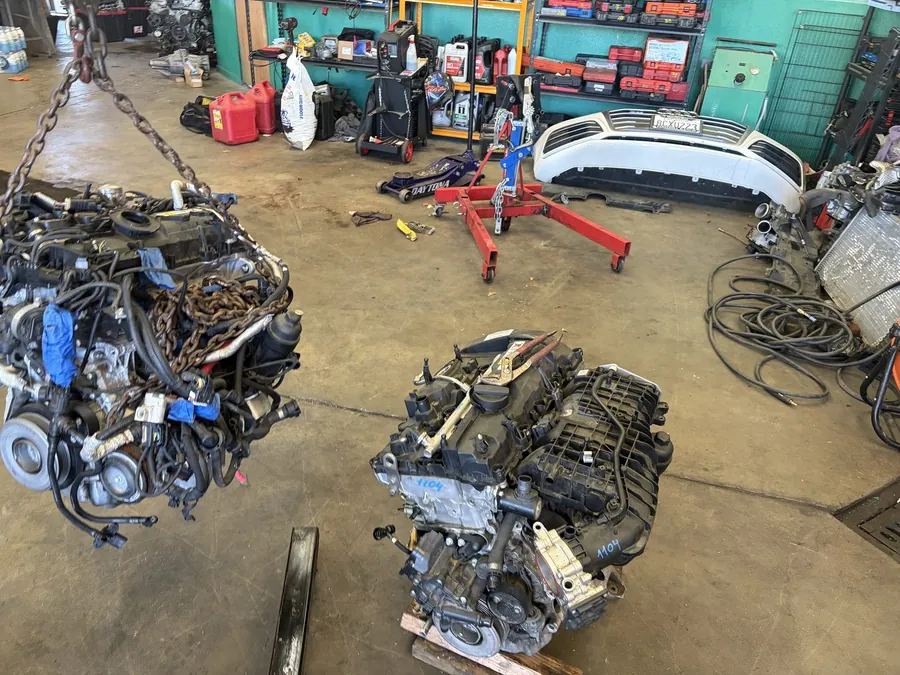
Engines We've Built & Fixed
A sample of recent work from the Supercanic crew.